

As midnight arrives, the crystal ball begins to glow - what does it reveal for public education in 2026? Here are my top five predictions, listed in no particular order, as I take my best guess at what’s ahead for Canadian schools.
#1. Adult Behaviour: Boundaries and Resets
As the crystal ball clears, it reveals a truth we can’t ignore: the future of schools depends not only on innovative design but also on the adults within them. Over the past year, a growing movement has emerged to reimagine what schools can be, exploring how we create better conditions for all students to thrive.
Clear boundaries and intentional resets will be essential for educators and leaders, creating space for well-being, continued growth and sustainable practices. Community commitments to caring, patient, and respectful adult behaviour will help establish norms for healthy human engagement in high performing schools. Codes of conduct will serve as important roadmaps for school communities, ensuring that all individuals are protected and respected, especially in a time when polite civilities too often feel like an afterthought.
One persistent challenge that slows progress in education is the adult blame game, where students end up problematized or pathologized. A critical reframe about school readiness is shifting the question from “Is the student ready?” to “Is the school ready?” For schools to truly be ready, and to support student happiness and foster educational excellence, adults must collaborate authentically and communicate with respect for one another and for all students.
When adults take care of each other, school communities grow stronger, and the shared commitment to caring for all students becomes the glue that holds well-being, compassion, and growth together.
#2. IEPs and AI
We don’t need a crystal ball to know we’re on the brink of an Individual Education Plan (IEP) revolution, with AI emerging as a thought partner to help educators personalize learning like never before. The overwhelming paperwork in inclusive education often drowns even the most efficient educators, leading to fatigue and wasted time reinventing the wheel or designing for audit compliance. It’s time to refocus energy in this specialized field so educators can spend time where it matters most - with students.
Research shows that AI-generated IEP goals and objectives have “no statistically significant difference in quality” compared to those written entirely by teachers (Terada & Merrill, 2025). The real impact lies in implementation, so let’s stop debating the method and start using AI to bring IEP clarity, measurability, and timeliness, freeing educators to make magic where it matters most, with students.
Inclusive education specialists need to spend more time exploring AI, and districts must invest in creating guided learning experiences that help educators use these tools to enhance professional practice. This is an area I’m adding to my list of New Year commitments - advancing the principle that “all means all” in our schools, and supporting both students and staff alike.
#3. Early Learning and Child Care (0-5 years)
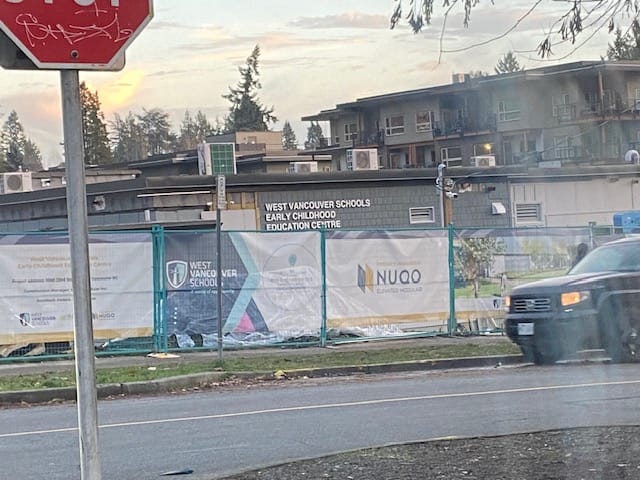
The 2026 crystal ball continues to reflect a radiant truth, our youngest children hold the key to tomorrow’s thriving communities. We have to stop missing the mark and continue to build educational systems that include the early years (0-5) as an integral part of the K-12 design.
The research has been repeatedly clear, focusing on the early years is not just an educational strategy, it is an equity imperative. Early childhood is where learning dispositions take root (OECD, 2025). Research consistently shows that the early years, ages 0 to 5, are the cornerstone of future success. These formative years shape brain development, social-emotional growth, and readiness for lifelong learning. Evidence also demonstrates that these capabilities compound over time: early gains in self-regulation, language, and numeracy amplify the benefits of education throughout life (Cunha et al., 2006, Heckman, Pinto and Savelyev, 2013).
The most forward-thinking school districts will continue to explore and integrate early learning and child care into the K–12 system. This work must be supported by essential government investment to ensure fiscal viability and provide the educational expertise needed to deliver high-quality early childhood education for our youngest learners in public schools. The stakes are high, but so is the promise and I am hopeful for what lies ahead.
#4. Assessment Practices
The crystal ball reveals a transformation, practices that once measured compliance now illuminate creativity, critical thinking, and individual progress. Assessment practices deserve greater attention in public education, after all, how can we know where to go if we don’t know where our students are? The design for learning must centre on students’ needs and the development of their competencies, alongside core foundational skills in literacy and numeracy.
In 2026, we need to dedicate more time to developing clear learning targets, so we know what we are teaching and why, and so students understand what success looks like. Benchmarks and progress monitoring should be repositioned in Canadian classrooms to track student progress toward grade-level, developmental, or chronological expectations. This doesn’t mean adopting a one-size-fits-all approach; rather, it means gaining a clear understanding of who our students are as learners as they grow and develop in our care.
Formative and summative assessments, combined with a variety of tools (e.g., portfolios, self-assessments, performance tasks), will help capture student learning and ensure that our practices remain culturally responsive and accessible. If we want students to be prepared for their future, we must refocus on assessment as a critical driver of meaningful instruction in our classrooms.
#5. EDI as Humanity, Intellect and Kindness
Gazing into the crystal ball reminds us that the words equity, diversity, and inclusivity (EDI) are not political battlegrounds; they are human commitments, grounded in kindness and guided by intellect. I hope the new year brings continued progress in Canadian public schools, keeping the individual student at the centre of all educational designs, where their unique human needs weave the rich tapestry of learning in every classroom.
When we talk about belonging in schools, we’re really talking about honouring humanity, recognizing that every individual must feel safe, respected, and cared for in order to thrive. Belonging is deeply connected to student achievement, engagement, and success (Bora & Altun, 2025). Designing equitable learning experiences in Canadian public schools is possible when our shared humanity aligns with a commitment to recognizing and honouring human variation.
This work can only succeed when intellect guides decision-making. Ongoing adult learning cycles, grounded in current research, evidence-based practices, expansive thinking, and a courageous willingness to unlearn, will help us chart the path forward in 2026. The future of education depends on our openness to Indigenous ways of knowing and respecting the past to course the present. The future rests on our ability to learn and to respect one another’s diverse lived experiences, alongside of the beautiful creativity of neurodivergent minds because diversity of thought is the foundation of innovation and equity. 2026 is the year to continue addressing bias and dismantling systemic barriers that prevent individuals from reaching their full potential in schools.
If the crystal ball reveals anything about the future of education, it’s this, kindness matters most. In today’s fast paced, politically charged, and globally interconnected world, kindness matters more than ever, it cannot be taken for granted. Kindness connects us to the feelings of others, nurturing empathy and compassion. It forms the foundation of well-functioning communities and serves as the thread that links intellect with humanity, creating innovative, high-performing learning environments where all students thrive.
Predicting the future is never as simple as gazing into a crystal ball, yet it offers a powerful chance to imagine what’s possible. As 2026 unfolds, let’s commit to leading with kindness, honouring humanity, and embracing the range of perspectives that sparks innovation in Canadian classrooms. The future of learning depends on all of us.

Author's Note: A year from now, I look forward to revisiting these ideas and seeing how education has evolved in 2026, and how my five predictions hold up. While there were countless directions I could have explored, these five aspects of public education resonate most with my current professional experiences. Also, in the spirit of author integrity and transparency, my AI thought partner assisted with slight edits to refine language and clarity for publication.