


This spin offers simple, everyday strategies families can use to help children stay organized, focused, and confident. It’s inspired by Sarah Ward’s recent visit to our school district and reflects our ongoing commitment to supporting self‑regulation and executive function for all learners. It’s also my second spin on executive function as the spark and the fuel for successful learning and living.
This is a longer read, so in true executive function fashion, give yourself some time and space to dive in. To prep, think about how much time you actually have to read. Get your coffee or tea ready, find a comfortable spot, and then time‑chunk this piece to prevent that overwhelmed feeling of “I don’t have time for this” from sneaking into your intellectual space.
Skim the headings and set a timer to read for 10 minutes. When the timer goes off, decide whether to continue or to stop. Try the same strategies we teach our children: start with what “getting done” looks like, make a small plan, and use self‑talk to stay focused.
Your learning is worth it!

I was in a hospital cafeteria recently and overheard a group of medical professionals talking about giving and receiving feedback about patient care. One individual compared the feedback she had recently received to what she sees happening in elementary schools; she said, “it’s just all wishy-washy, it’s everywhere but nowhere.” Her comment surprised me. It wasn’t my conversation, and perhaps I shouldn’t be recounting it, but it stuck with me because there was powerful message in what she said, one about practicality and clarity. Even though I only heard a small snippet, it made me think about how easily feedback can become muddled when the language is vague or overly polished.
Education, in particular, has become notorious for its edu‑jargon: conceptual frameworks, learning pathways, and systems that turn simple ideas into complex constructs wrapped in educational code. Listening to that conversation made me realize how often the same thing happens when we talk about executive function. Too often we use big terms and intricate charts when what parents really need is something practical, useful, and clear. How we communicate learning, and how we collaborate with families on the essential attributes of healthy human development, is critically important. If our language obscures rather than illuminates, we risk losing the very people we’re trying to support.
A little over a month ago, we welcomed Sarah Ward to our school district for sessions with parents, school administrators, educators, and support staff. Her practical approach to activating executive function was powerful and grounded in everyday experiences. Personally I have always appreciated how Ward breaks down complex thought processes in an accessible, understandable and practical manner. This spin is my attempt to capture the heart of her presentations while stripping away the jargon and speaking plainly about what executive function means for our children and youth, and why it matters in their daily lives.
I’ve positioned this spin through “I can” language to spark resiliency, confidence, and a clear sense of what children, and families, can do to fuel healthy decision‑making and competence.
So... what is Executive Function and why does it matter?
Executive functioning (EF) is a set of mental skills that people of all ages use to solve problems, manage information, and carry out goal‑directed actions. These skills help us regulate our thinking, emotions, and behaviours, often in the process of getting something done. EF also plays a central role in emotional regulation and managing energy levels throughout the day.
EF skills develop gradually over childhood and adolescence, are highly interconnected, and can be intentionally nurtured. Because the brain is neuroplastic, children’s environments, supports, and opportunities to practice EF skills have a direct and positive impact on the development of the prefrontal cortex. Increasing evidence from educational neuroscience shows that targeted practice leads to measurable changes in the brain regions responsible for planning, attention, and self‑regulation. With time and repetition, children’s brains literally grow stronger in the areas that help them stay organized, focused, and ready to learn.
This is good news. It means there is so much we can do to support the healthy development of executive functioning in our children and youth. The following eight sections outline simple, practical, everyday strategies, framed through “I can” language, that help build EF skills in ways families can easily understand and can use at home.

Section 1: Making Readiness Real
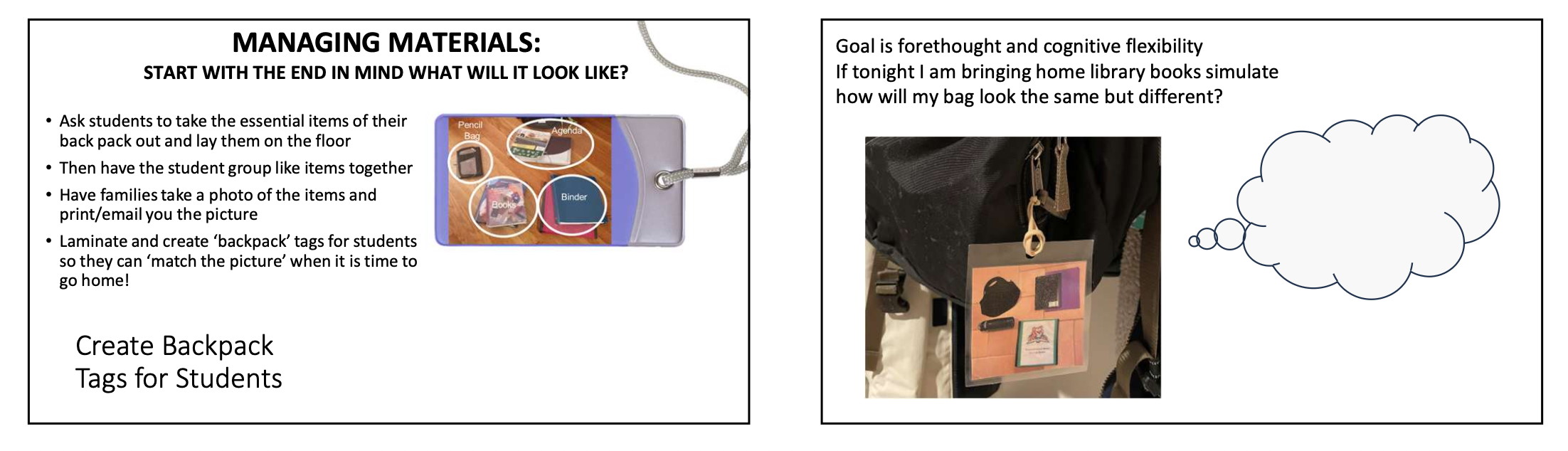
There are two key cognitive abilities required to complete a task; non-verbal working memory and self-regulation. Non‑verbal working memory refers to a child’s ability to hold pictures, actions, and visual information in their mind long enough to use it. It's like a mental "wipe board" where they can keep track of what they're doing, what comes next and what something should look like.
In everyday life, a parent can see non‑verbal working memory at work in many ways. A child may remember what they are supposed to be doing (for example, getting ready for bed). They may follow multi‑step directions, such as understanding that getting ready for bed means brushing their teeth, washing their face, and putting on pyjamas. They might hold a picture in their mind of what is supposed to happen (like remembering that they need to grab their backpack before going to school). They could use mental time travel when they think back to where they left their backpack yesterday after getting home. Children rely on non-verbal working memory for emotional control, such as staying calm when they can’t find the backpack, recognizing their frustration but continuing to look rather than getting angry.
It is important to highlight that non-verbal working memory isn't about intelligence, it is about how the brain holds and uses visual information to guide behaviour. Children thrive when they can mentally picture what "ready" looks like and then work toward it on their own.
For parents who are in the midst of bedtime struggles or other “getting ready” challenges, Ward’s Mime‑It strategy is worth exploring. It is not enough to say, “Get ready for bed” or "Find your backpack" and expect a child to fully and successfully complete the task. Ward’s Mime‑It strategy helps strengthen non‑verbal working memory, if‑then thinking, and self‑directed talk. She describes it as running a little movie in your head, and then miming it.
MIME‑IT asks children and youth to think through six parts:
- Make an image: What will it look like when it’s done?
- I: What will I look like while I’m doing it?
- M (Move): How will my body be moving?
- Emotion/Energy: What will it feel like?
- Implementation/Intention: If I do this, then this will happen.
- Talk: What is the self‑talk that guides me through it?
This simple structure helps children picture the steps, understand the sequence, and talk themselves through the plan, rather than relying on vague instructions from others that are too big and too abstract.
The second major cognitive activity involved in task completion is self‑regulation. Self‑regulation includes the ability to pause, hold information in working memory, and use inhibitory control to guide what you do next. It is a large and complex construct that I do not want to oversimplify in this spin; instead, my goal is to make it accessible in the context of developing executive function skills. Its development is essentially a progression from relying on outside support to building internal control. Children first depend on external regulation (adults structuring and guiding the moment), then move to other‑regulation (co‑regulation and shared problem‑solving), and eventually develop internal regulation, as they learn to bring those “outside” supports into their own thinking.
These readiness “I can” statements reflect the foundational skills children are building to make getting ready real and attainable.
Making Readiness Real "I can" statements:
- I can picture what "done" looks like.
- I can think about breaking down time into steps to get to "done".
- I can gather what I need to before I start.
- I can put things back where they belong.
- I can check my backpack to make sure I have what I need.
- I can keep my space tidy enough to find things.
Section 2: Timing is Everything
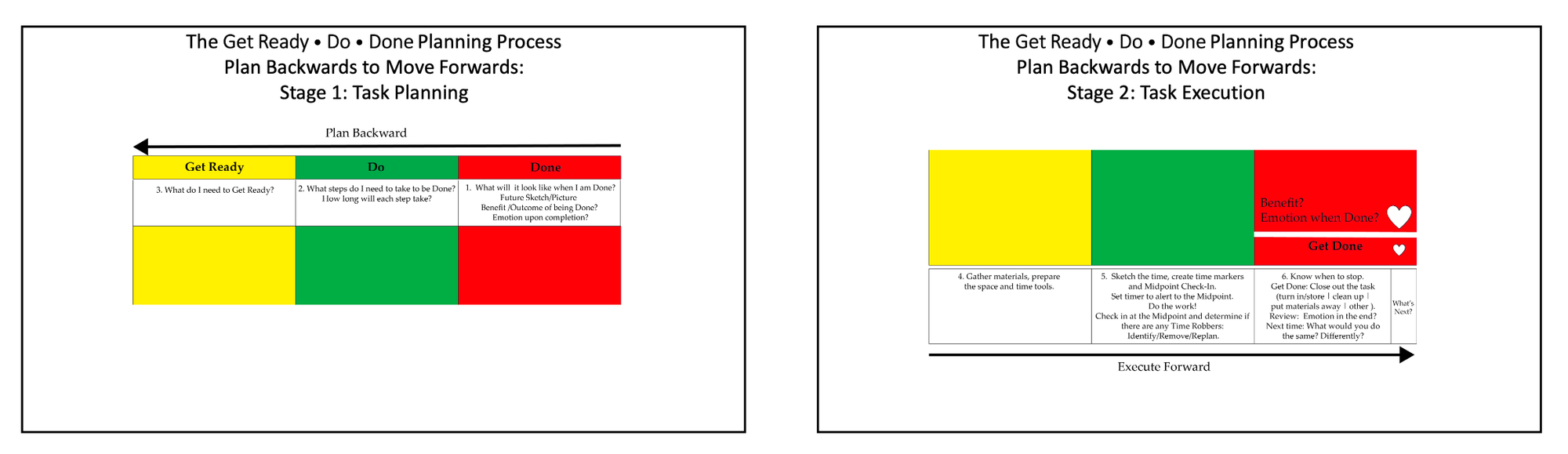
Children aren't born with a fine tuned sense of time, it is grown through practice and out of necessity. Understanding the passage of time, or the time horizon, is a crucial aspect of creating tangible and achievable goals. Helping children understand how to achieve their goals and what "done” looks like is at the heart of Ward’s "Get‑Ready‑Do‑Done" strategy. This involves planning backwards and taking the invisibility out of planning by making task completion visible. Anticipating obstacles and making tweaks to the plan involves future sketching and time planning to figure out what you need to do to finish.
“Get Ready–Do–Done” is a strategy that Ward first shared in our school district in 2018, and it has truly stood the test of time in our classrooms. We were pleased to have her revisit it during her recent visit and reinforce it once again as a strategy that works. Executive functioning involves simulating and constructing the plan, how it is going to go and what "I" need to do to complete the plan. Ward’s “Get Ready–Do–Done” is a backwards‑then‑forwards sequencing strategy that helps children picture the end goal, map out the steps, prepare what they need, and then complete the task from start to finish. There are three visual sections to this strategy:
- DONE - what will it look like when it's finished? (Tip: start with the end in mind)
- DO - what steps do I need to take to get there? (Tip: identify the actions and steps needed to get finished)
- GET READY - what tools do I need before I start? (Tip: think about what you need before you start the task, so you don't lose momentum or get distracted mid-task by collecting materials needed)
For older children and adolescents, executive functioning gets harder because they have to carry out tasks over greater distances of time. One example is when a student receives an assignment that isn’t due for a month; they have to plan, pace themselves, and keep track of the work over time. It is not a lack of motivation or executive function failure when youth get lost in the time, it is biology. A deadline a month away doesn’t register as urgent to the teenage brain until it is. Compared to younger children, teens are juggling extracurriculars, multiple subjects, social lives, and much more, all while their brains are undergoing an intense period of growth. The prefrontal cortex (the area responsible for planning, prioritizing, working memory, and inhibition) is one of the last regions to mature in the human brain. Therefore, most teens can’t successfully manage all delayed timelines without additional adult support.
This is why strategies like Get‑Ready‑Do‑Done, visual planning, backward mapping, and time‑chunking are so powerful. These strategies make invisible thinking visible and help bridge the gap between where teens are developmentally and what they are expected to do.
Teaching self‑regulation in relation to executive functioning involves creating time markers with corresponding space markers. When we break this down into “I can” competencies, we are essentially helping our children learn to self‑monitor the passage of time and check in with themselves as they move toward a completed task.
Timing is Everything "I can" statements:
- I can use a timer to help me start to finish.
- I can break a job into smaller steps and match time to completion.
- I can estimate how long something might take to finish.
- I can notice when I'm running out of time and adjust.
- I can start even when I don't feel like it.
Section 3: Focusing and Finishing
In a time when sustained attention is reducing, executive functioning is surfacing as a core attribute for successful learning. Researcher Gloria Mark has found that people's attention spans have been shrinking for at least 15 years. Mark argues that the shrinkage is primarily due to the increasing demands of the digital era, computers, smartphones, digital notifications, social media, etc. Her research documents how this reduced ability to sustain deep focus over time negatively impacts stress levels, and productively rates, leading to more errors and increasing recovery time post mistake making to re-immerse in tasks. While technology is not solely to blame, there is certainly something interesting happening related to how humans are processing information in modern times.
Sustained attention refers to the ability to maintain focus on a stimulus over an extended period, relying on alertness, resistance to distraction, and mental control (Unsworth & Robison, 2020, Schoechlin & Engel, 2005). Sustained attention involves the three stages (1) attention getting, (2) attention holding, and (3) attention releasing (DeGangi & Proges, 1990). This is important as the ability to perform tasks in everyday life relies on an individual's ability to attend to the task at hand. From reading instructions to following instructions, from walking across the street to driving a car in traffic, individuals who are able to sustain their attention are able to move towards the safe, independent completion of tasks.
Life is full of distractions that interrupt and interfere with sustained attention. There are many ways we can strengthen our ability to stay focused, including structuring our digital environments to reduce interruptions, limiting multitasking, becoming more aware of our natural attention rhythms throughout the day, and taking intentional breaks. Movement is also a critical part of reclaiming energy and maintaining focus. Making movement matter throughout the school day is an essential strategy for sustaining attention. For the past ten years, our district’s physical health and literacy lead teachers have infused movement into classroom instruction, and our data clearly shows the positive impact that embedded, meaningful energizer intervals have on deeper cognitive activation.
Understanding when your energy wanes and mapping your personal productivity patterns can make a meaningful difference in students’ success at all ages. Conducting your own “attention inventory” can help you understand your capacity to focus and finish tasks. As parents supporting our children’s growth and development, this awareness of self matters. When we understand when we are at our best, we are better able to offer calm, consistent support, because our own energy and regulation directly influences the support we can provide to our children.
The relationship between being able to see time, attend to the passage of time, and plan time is essential to the development of strong executive functioning skills. Ward’s strategy of using an analog clock as a visual marker of completion is a powerful tool for helping children understand time. Recognizing and perceiving the passage of time is much more challenging in a digital environment, where numbers change without offering a sense of duration. Teaching children to use analog clocks brings the language of time to life. Analog clocks help children see time, its movement and its volume, and, in turn, learn to plan and manage it. As much as I love my Apple Watch, I’m going to encourage some old‑school shopping and echo Ward’s advice: using analog clocks remains an important strategy for developing the executive functioning skills needed to focus, attend, and complete tasks.
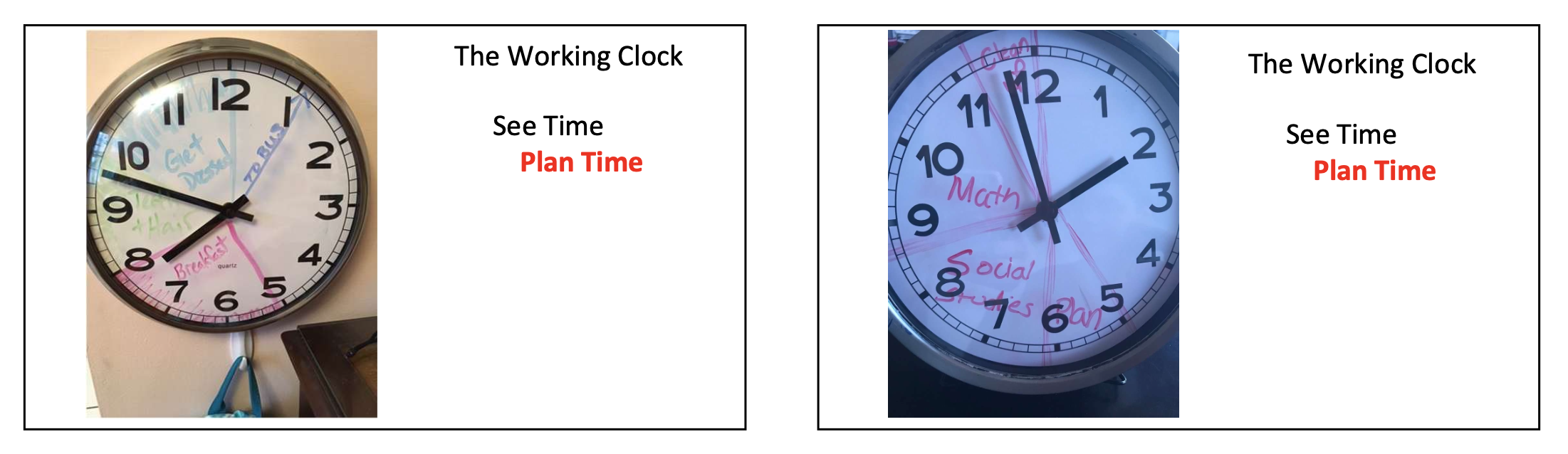
Alongside using analog clocks, digital and movement breaks, it is important to remember that focus doesn’t mean sitting still; it means knowing how to redirect yourself back to a task when your mind wanders. The following “I can” statements outline some key concepts related to focusing and finishing while activating core executive functioning strategies.
Focusing and Finishing "I can" statements:
- I can notice when I'm getting distracted.
- I can bring my attention back when it drifts.
- I can ask for a quiet space when I need it.
- I can finish a task even when it feels hard.
- I can take a break and return to my work.
Section 4: Thinking Ahead
Underlying executive function is the passage of time. Teaching our children and youth to independently execute tasks requires more than step‑by‑step instructions, it depends on their ability to look ahead. Future thinking allows children to imagine outcomes, anticipate what will be needed, consider consequences, and make choices that serve them well. This kind of mental time travel is at the heart of executive function and is essential for developing independence, resilience, and sound decision‑making.
According to Ward, spatial temporal distance is key to successful executive functioning and is all about how mentally far you can see into the future. It refers to the ability to visualize time and tasks as though they exist in physical space.
Think about your child's bedtime routine. Instead of simply saying "Bedtime is in 30 minutes, time to start getting ready," help them picture the steps and how long each one takes.
- 5 minutes to brush your teeth and wash your face.
- 5 minutes to put your pyjamas on and place your clothes in the laundry bin.
- 5 minutes to use the washroom and wash your hands.
- 5 minutes to choose your bedtime story and get into your bed.
- 10 minutes to read together.
You could take each timed task and map them out on sticky notes, or draw them as a simple timeline on paper, to help your child see time and understand it as a space to move through.
The development of spatial temporal distance, what Ward calls “the time horizon,” involves effective time management. With better‑managed time, individuals can satisfy their responsibilities, goals, and work demands. More importantly, strong time management reduces the likelihood of feeling overwhelmed when tasks pile up, experiencing a sense of failure when responsibilities aren’t completed on time, and encountering other challenges that negatively affect psychological well‑being (Aeon & Aguinis, 2017).
Barkley (2012) emphasizes that repeatedly practicing skills such as self‑monitoring, step‑stopping, “seeing” the future, “saying” the future, feeling the future, and mentally playing out future scenarios helps individuals “plan and go” toward their goals. These practices strengthen cognitive flexibility and executive functioning.
Another strategy to try is Ward’s “feature blocking,” which supports the development of organizational thinking. She described this to our community as encouraging children and youth to first create a mental image of their plan and then show and explain the plan in a way that matches that image. This approach helps young people hold the future in mind long enough to organize their actions and move forward with intention.
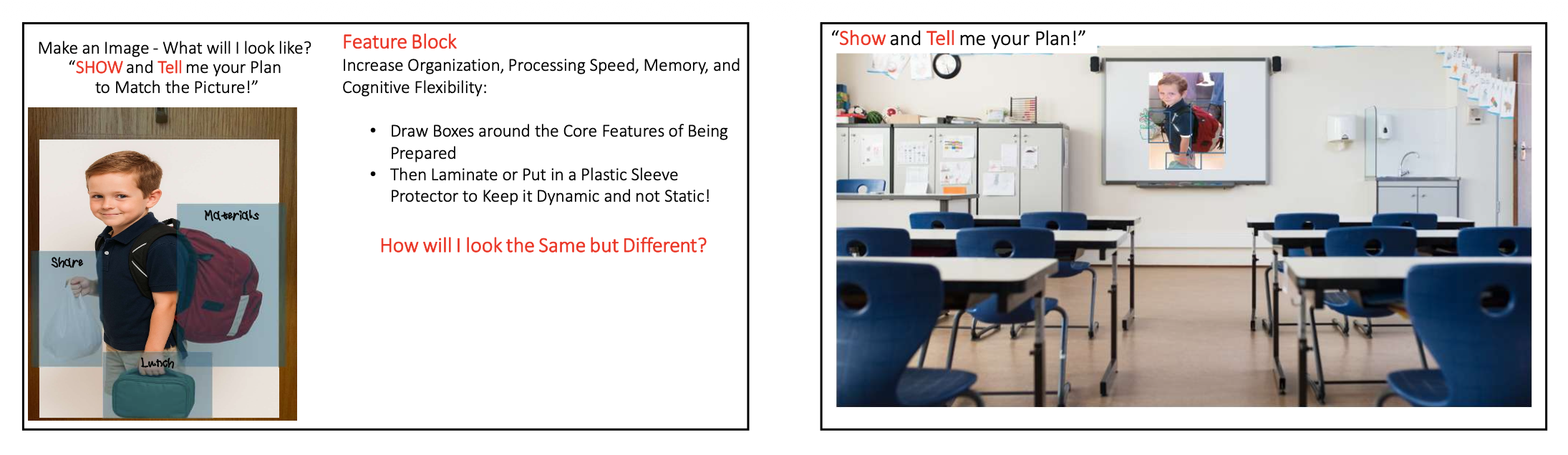
Self‑regulation is a big part of being able to think ahead. While this spin isn’t delving deeply into self‑regulation as a core construct of healthy well‑being, its relationship to executive functioning and spatial temporal distance is important to recognize. The ability to see into the future and understand the steps needed to get there is anchored in self‑regulation, which relies on an individual’s ability to pause, think ahead, and adjust behaviour based on the situation.
“Stop and think,” along with the ability to shift, positions individuals to transition effectively through time and sustain attention so they can move through one activity at a time. Spatial temporal distance supports self‑regulation by helping children visualize the steps ahead, understand what the situation requires, and adjust their behaviour to move from “now” to “done” independently. The following “I can” statements break down actionable ways to support the development of thinking ahead.
Thinking Ahead "I can" statements:
- I can stop and think before I act.
- I can imagine what will happen if I make a certain choice.
- I can choose the option that helps me the most.
- I can learn from what happened last time.
- I can make a plan for what happens next.
Section 5: Controlling the Big Feels
Again, I do not want to underplay the important relationship between self‑regulation and executive functioning. Controlling big feelings is not about stifling or silencing emotions. Let’s be real, some things really hurt, and some things can be genuinely confusing. Having big emotional reactions to life’s events is real and cannot be dismissed. Helping children learn how to emote and express their feelings in a socially appropriate and safe manner is critical to their future success. Children need tools, not shame or excuses, to handle big feelings. Executive function and self-regulation skills build resilience, independence, and confidence.
As adults, our role is to support children’s learning and to collaborate with schools or health‑care professionals when struggles emerge. Children will have different learning trajectories as they work through the social nuances and complexities of interpersonal relationships, and life experiences. The relationship between the development of executive functioning and managing life’s big feelings is therefore critically important to explore.
For the purpose of this spin, I want to highlight that engaging with one’s own internal thoughts, and learning to give appropriate thoughts appropriate attention, is essential for healthy development. When the emotional centre of the brain is hijacked by big feelings, working memory can quickly disappear, leaving an individual stuck in the moment of worry or duress. Because executive functioning is closely tied to emotion, many children estimate how long a task will take or how difficult it will feel based on their emotional state rather than on past experience or objective information. Big emotions can distort perceptions of time and difficulty, block learning from past successes, and escalate emotional dysregulation.
Executive function and emotional regulation are widely recognized as trans-diagnostic factors that contribute to socio‑emotional and behavioural success. Together, they shape the ways children cope with stress, negative thought patterns, and frustration. Under development of emotional regulation will result in executive dysfunction ripple effect (Schmidt, 2025). Overtime the emotional impacts of executive function dysfunction can be lasting, impacting academic and work performance and social relationships.
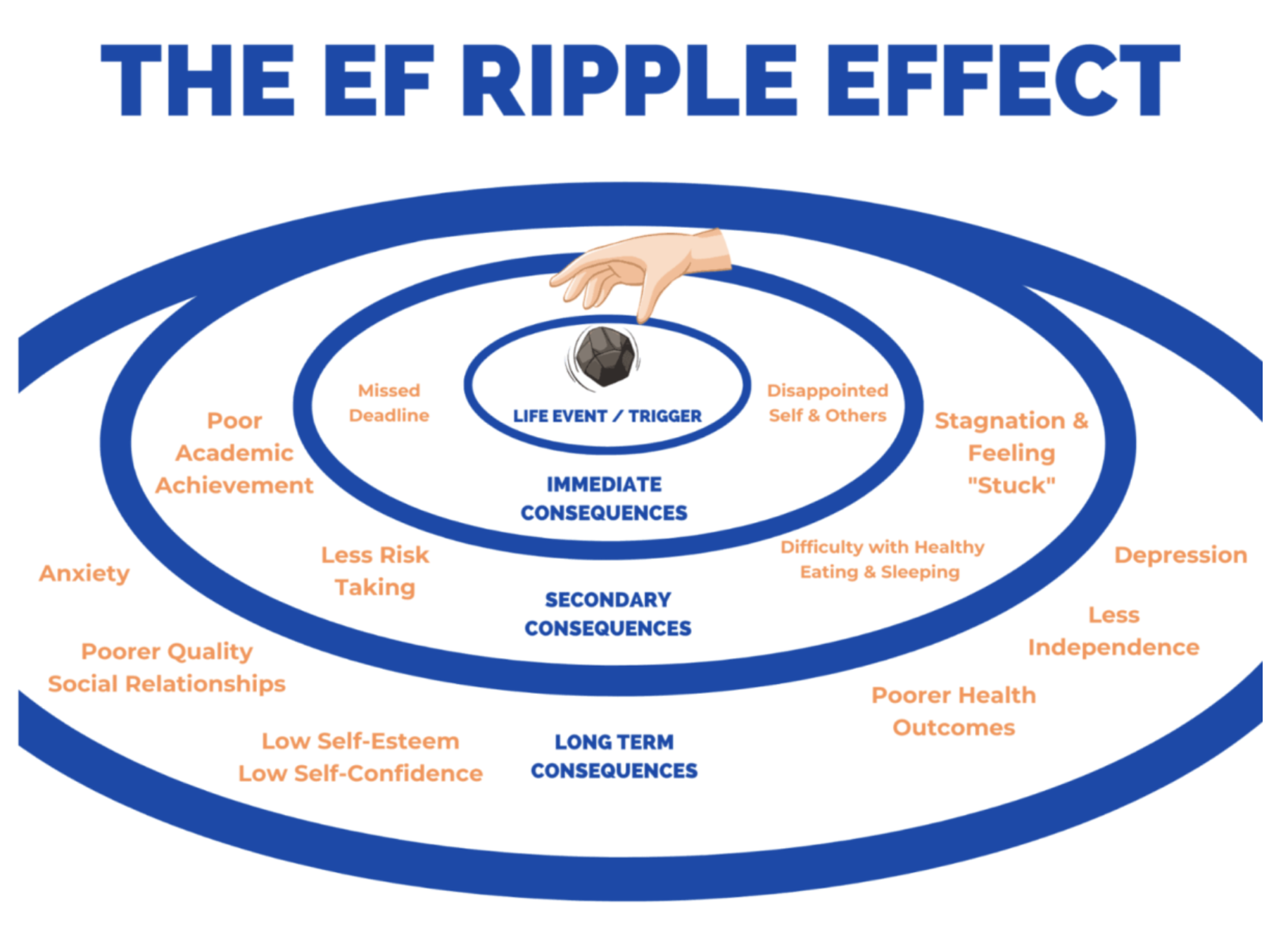
Supporting the development of executive functioning in moments of strong emotion begins with helping children build awareness and self‑talk habits. The following “I can” statements can help to guide this growth.
Controlling the Big Feels "I can" statements:
- I can notice when my feelings start to get big.
- I can use a strategy to calm myself (breathing, movement, quiet space).
- I can talk about what I feel.
- I can ask for help when things get overwhelming.
- I can try again after something goes wrong.
Section 6: Seeing the Big Picture
The ability to “read the room” is an essential life skill. Emerging research points to social acuity as the way individuals tune in to those around them by sizing up the people, space, and context. This skill is technically called situational awareness, and it involves using environmental cues to answer the question, “How do I know what I need to do?”
Situational awareness is linked to social intelligence and an individual’s ability to scan a space by thinking in zones, figuring out timing by getting on a timeline, organizing needed objects, and considering the roles of the people in the space. All of this needs to come together to effectively transition from task initiation to task completion.
The speed at which a child can “size up a space” involves a combination of executive function skills, human connection, and the design of the physical environment. When an individual enters a room, they instinctively scan what is happening, who is there, what they feel, and what they need to do. This quick scan and assessment depends on the brain’s ability to understand context, read cues, and shift behaviour accordingly.
For example, when a child walks into a quiet classroom, they may see students sitting at tables working on their laptops and talking quietly. They then notice their teacher moving from table to table interacting with students. They see the assignment on the board and the checklist of tasks to be completed before submission. They see the wall timer is on, and they quietly move to their table, take out their laptop, and prepare to start working. This child has successfully read the room and is using a combination of visual, environmental, and human cues to prepare to participate in the task at hand.
Moving toward understanding the big picture and determining what needs to be done, whether to complete a task or regulate behaviour in response to what is felt, heard, or seen, is tricky for many individuals. This involves future thinking and self‑regulation skills that grow only with support, modelling, and practice.
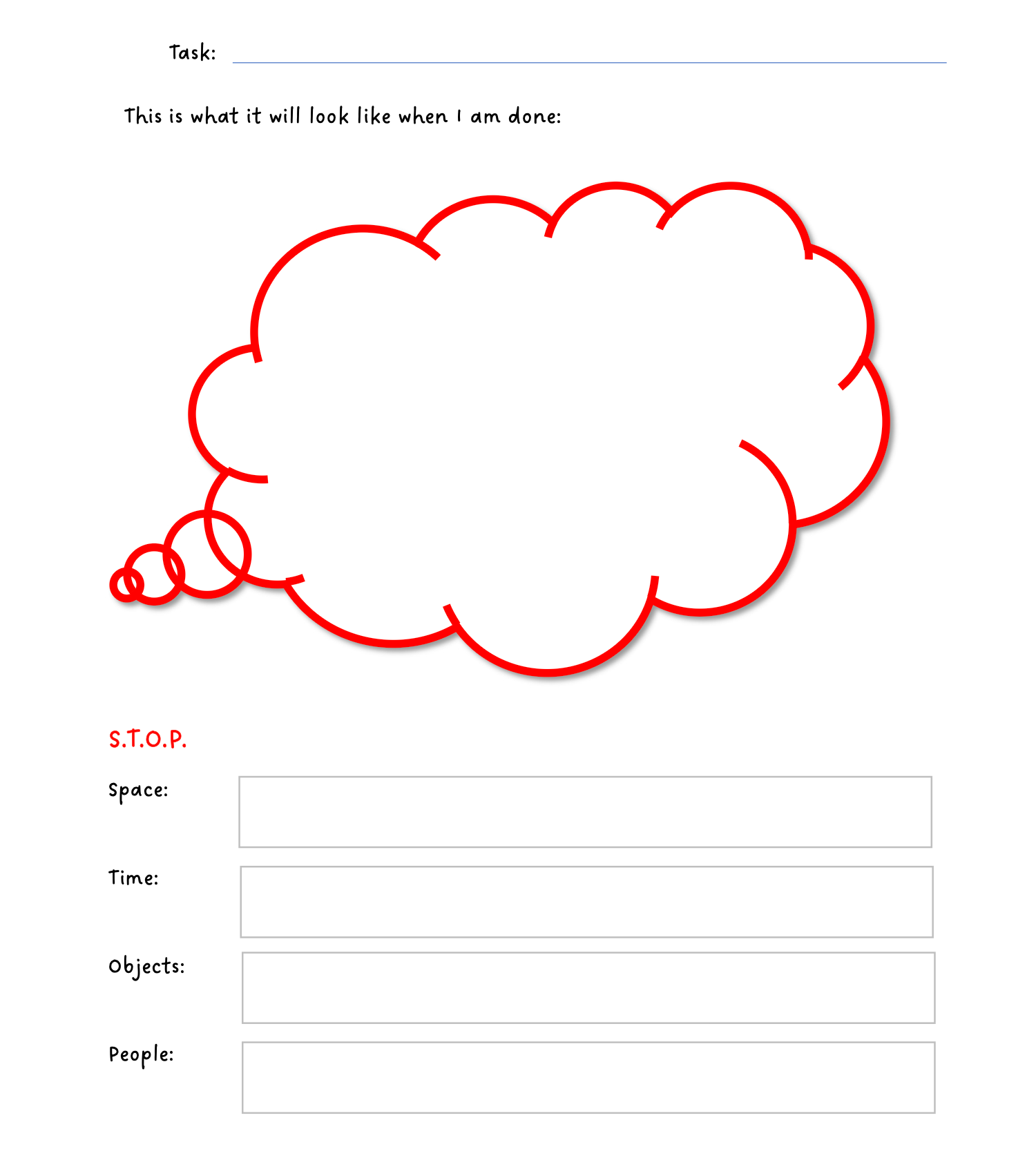
Ward's "S.T.O.P. and read the room protocol" involves knowing what you have to do and what it will look like when it is done. Understanding what a situation requires helps individuals adapt, plan and act appropriately. Ward's protocol is helpful in positioning the "I can" statements necessary for successfully seeing the big picture. While 90% of task planning happens in a different space from where you execute the space (Ward, 2026), simulating and constructing the plan (e.g. how it going to go and what do I need to do?) is a keystone of supporting executive functioning skill development.
See the Big Picture "I can" statements:
- I can look around to understand what is happening.
- I can notice what others are doing.
- I can figure out what the situation expects of me.
- I can adjust my behaviour to match the situation.
- I can change my plan if things change.
Section 7: Solving Problems
The ability to solve problems is integral to healthy human development. Problem‑solving involves trying a different approach when something doesn’t work; it extends beyond intelligence and is essential for forming meaningful, lasting social relationships. Cognitive flexibility and problem‑solving are closely interrelated, functioning as pivotal attributes of strong executive function and self‑regulation skills.
Cognitive flexibility refers to the mind’s ability to shift between tasks, perspectives, and goals, allowing individuals to regulate thoughts and actions effectively across diverse contexts. Research has repeatedly demonstrated that these cognitive abilities are strong predictors of success in school (Duckworth & Seligman, 2005), careers (Bailey, 2007; Blaye, 2022), and relationships (Eakin et al., 2004). For parents, this means that spending time teaching and supporting problem‑solving is especially important. The development of cognitive flexibility unfolds gradually throughout childhood and continues into adolescence and early adulthood. This extended developmental period is closely tied to brain maturation, making ongoing support and practice essential.
Cognitive flexibility also involves a willingness to try different strategies, reflect on what worked, and adjust in response to changes in the environment (Dajani & Uddin, 2015). Teaching children to engage in independent problem‑solving begins with caring adults who model and scaffold how to navigate unexpected events, strong emotions, and everyday conflicts.
Showing children how to collaborate and communicate is an essential life skill. Parents can support this by using self‑talk, demonstrating calm problem‑solving steps, and modelling “I can” affirmations even during difficult moments. This doesn’t mean that the sky is always blue, rainbows magically appear on demand, or pots of gold solve everything. Some situations are genuinely difficult, and some problems may not be solvable at all. However, talking through these moments openly, honestly, and in developmentally appropriate ways is an important part of parenting and helps prepare children for the realities of life. The following “I can” statements can help children reflect on their behaviour in different environments and situations.
Solving Problems "I can" statements:
- I can try a different strategy if my first idea doesn't work.
- I can notice what went well,
- I can notice what I need to improve next time.
- I can set small goals for myself.
- I can feel proud when I succeed.
Section 8: Owning Choices
Taking ownership of one’s choices is not only an important part of maturation but also essential to developing independence and living a healthy, fulfilling life. The ability to self‑monitor and reflect on one’s actions and decisions is a vital component of executive functioning skills. These reflective capacities help children become more accountable, confident, and growth‑oriented. When individuals don't learn how to accept responsibility for their choices, life’s pathways, especially relational ones, are compromised and fraught with struggle. This is not what anyone wants for their child. When mistakes are made, learning how to own the choices that led to the problem is part of understanding how to make better choices in the future.
Owning choices also involves developing responsibility for completing tasks. One simple way that parents can support the healthy development of ownership is by establishing household chores or “jobs.” From food preparation to cleaning up after oneself and helping others, the benefits of giving children chores are well documented. In the household, parents can further strengthen their child’s executive functioning by encouraging regular engagement in these age‑appropriate responsibilities. By doing so, the executive functioning skills of working memory and inhibitory control get a boost as children learn, and own, what they have to do by doing it.
Ward talks about the dangers of “waiting paralysis,” a growing pattern in which individuals lose a sense of the passage of time and develop strong avoidance strategies. This combination is concerning, as it fuels the negative inner‑critic voice, prevents the formation of a healthy sense of what one is working toward, and blocks self‑directed and self‑initiated action. To combat waiting paralysis, Ward promotes “saying the future” and using verbs with the suffix ‑er as a strategy to build ownership of the task or job to be completed. Assigning jobs and naming tasks, such as “you are the note taker” or “you are the sweeper,” personalizes the work and strengthens the ownership children need to complete their responsibilities successfully.
Decreasing a child's dependence on adults and increasing their ability to monitor their own progress requires careful attention to the line between helping and enabling. The gradual release of responsibility and ability is an important part of developing ownership. Letting children learn by doing, and sometimes failing, is a key aspect of healthy development. Ensuring that choices or tasks are developmentally appropriate and safe is essential, as success builds on success.
As children practice these skills, they start to internalize what ownership looks and feels like. Over time, as their executive skills develop, this growing sense of agency and individual success can be expressed through simple “I can” statements.
Owning Choices "I can" statements:
- I can own my choices.
- I can try again when something goes wrong.
- I can make things right when I mess up.
- I can think before I act and I can finish what I start.
- I can choose what helps, not what hurts.
So... what next?
The good news is that executive functions can always be improved (Diamond & Lee 2011, Klingberg 2010). Repeated practice is the key, as is the support and guidance of nurturing, caring, healthy adults. This is where you as a parent, or caregiver, make all the difference. Parents are their child's first teacher. That truth can never be underestimated or discredited. Every time you help your child pause, plan, shift, or try again, you’re not just getting through a moment, you’re wiring a brain for resilience and lifelong learning.
So, what is next? Start small with one strategy to practice each week. Create space for modelling and for do‑overs when things don’t go right. Communicate and celebrate progress, even when it is slow or messy.
Executive function doesn’t develop through perfection, it is all about practice and presence. Learning how to be present and to persist, both individually and in community, is one of the greatest gifts you can give your child as they learn to navigate the world around them to find success, joy, and happiness.
This is the goal of executive function. These simple habits and “I can” statements become the Fuel for Life: Practical Strategies to Boost Executive Functioning that children carry forward long after the moment has passed.
Author's Note:
This spin was a long one to consolidate. Hopefully the length doesn’t detract from the intent, which was to document four recent presentations with Sarah Ward and many years of exploring the activation of executive function and self‑regulation in our school district. The world our children are learning to navigate is complex, confusing, and incredibly beautiful. Learning how to think clearly, independently, and thoughtfully is the goal of developing executive function skills. These insights helped shape this reflection, along with a touch of assistance from a digital writing tool to support clarity and flow.