


This is a precious story to share. It is a photo story of our new West Vancouver Schools Early Childhood Education Centre. A unique story centred in a 15‑year journey of imagining a new way to integrate early learning and child care into the K–12 educational system.
This vision is grounded in a desire to do better, to support families searching for options and to ensure our youngest learners receive educational excellence beginning in infancy. Changing the narrative that school readiness is about preparation for Kindergarten and reframing the critical importance of educationally influencing the beginning of a child’s learning adventure as infants, toddlers, preschoolers, into Kindergarten.
My community is known for affluence and aptitude. Our schools are high performing, our amenities are established, and our environment is stunning and safe. It is a place made for families to raise their children with care and connection.
My family and I have lived here for almost two decades, and we have happily raised our two daughters in this community. I am deeply committed to serving it and feel privileged, in my professional role, to have done so for the past 22 years. I share this to position how important this work is, our children and families are at the core of vibrant, healthy communities.
Ensuring that public infrastructure centres the needs of young children is an essential part of community development and long‑term sustainability. This is our why, and it is what has driven our school district's success in competing for provincial funding and in prioritizing early learning and child care as an essential part of our work within the K–12 educational system.
There have been many debates about where early childhood education is best positioned. I am encouraged that it continues to move through an integration process into the public education system in our province. This is not the time to lose that focus or to double back on our commitment to ensuring all children have equitable access to excellence in both education and care. This spin speaks to the depth of detail required, and the importance of intentionally designing educational spaces, to support excellence for learners of all ages.
Imaging the Beginning
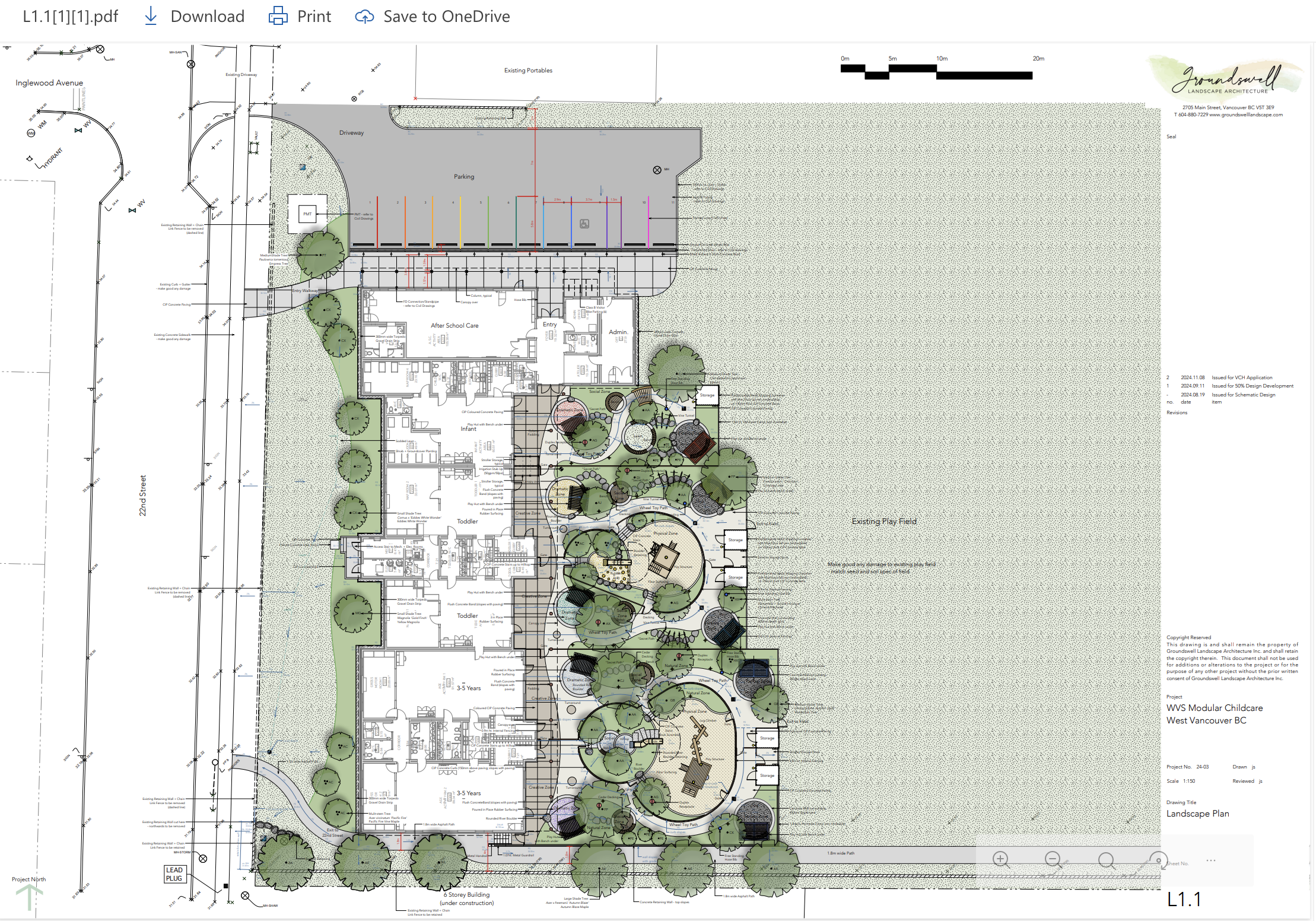
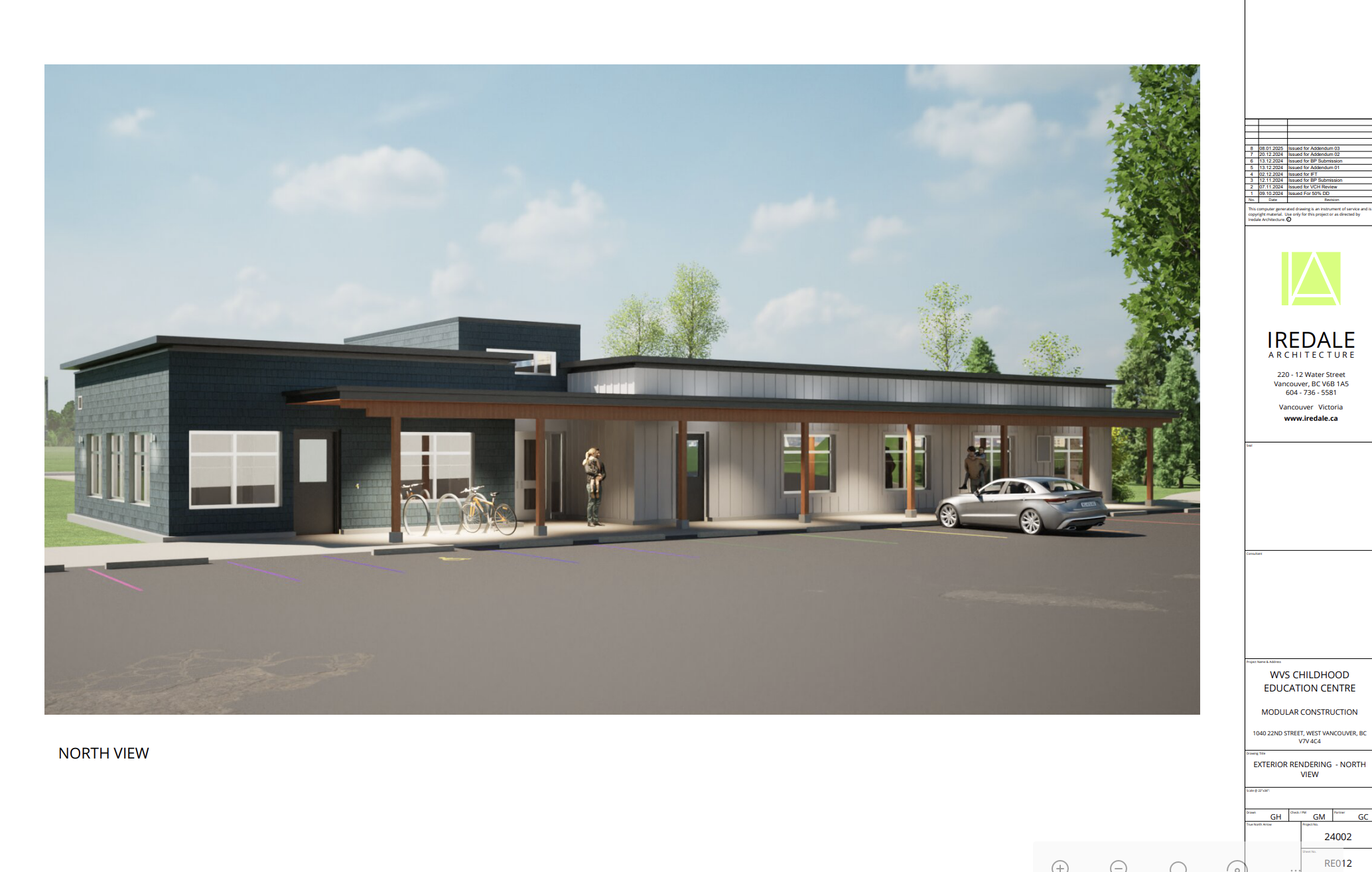
Groundswell Design Group & Iredale Architects, Initial Renderings, West Vancouver Schools Early Childhood Education Centre
Just as a child’s learning journey does not begin the moment they step into Kindergarten, this project did not begin with stunning renderings or the coming together of an amazing design and building team. Our West Vancouver Schools Early Childhood Education Centre began with a dream and a long‑standing commitment to doing better for every child.
To expand and centralize early childhood and family services under the jurisdiction of a public school district, with the resources and creative capacity to position and support the work required to ensure every child has a strong beginning, has always been central to this vision. This endeavour began through experimentation with community hub models, such as the Properties Family Hub, and through the development of strong community and interagency partnerships.
When early childhood education, K–12 schools, and family supports operate in disconnected silos, we miss key opportunities to provide meaningful, cohesive supports. We perpetuate a misinformed “fix‑it” model, where schools assume the role of intervention, underestimating the profound impact of early education. With this belief at the centre and our commitment to doing better, the work moved from vision to practice as we launched into designing a space where intention is felt in every detail.
Designing with Intention
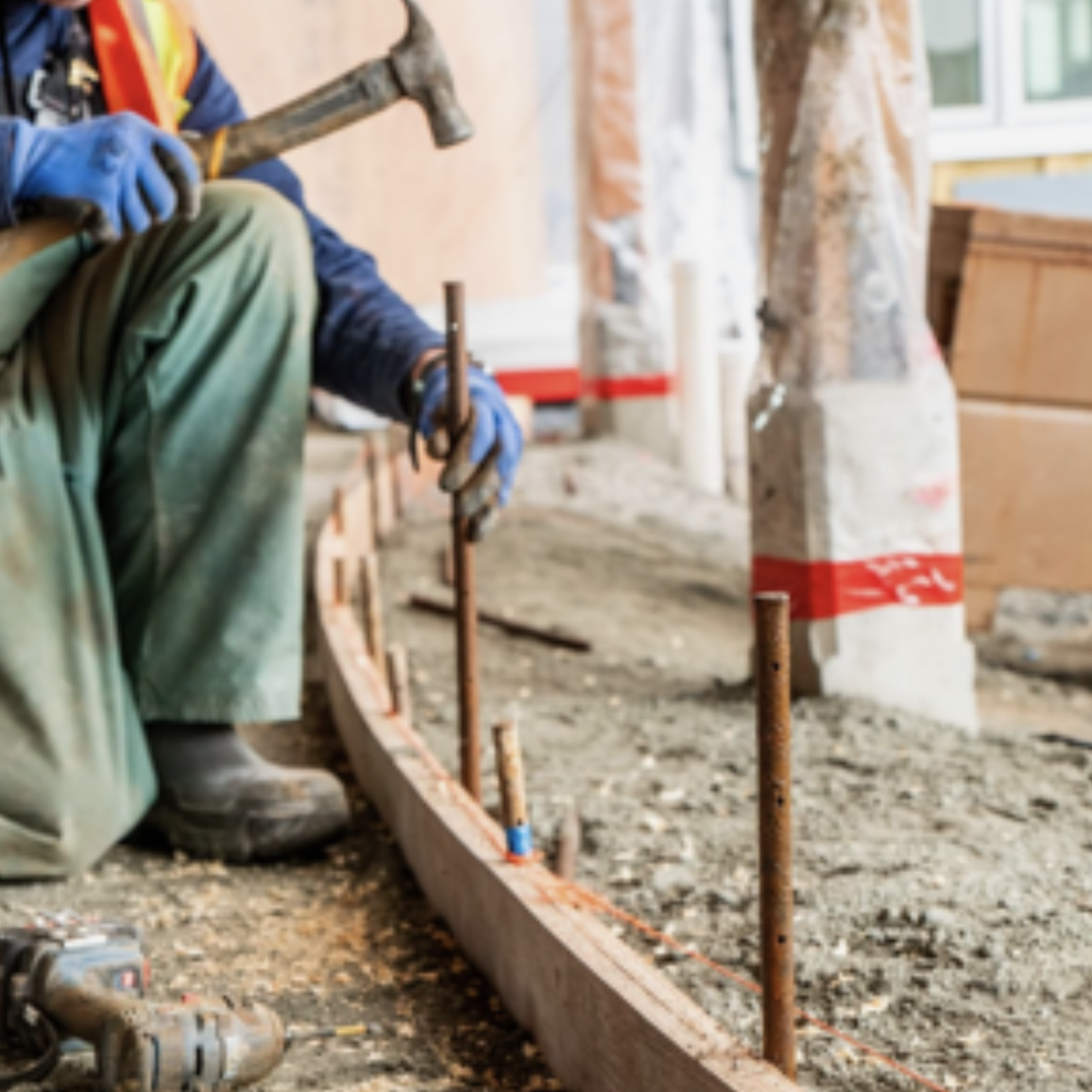
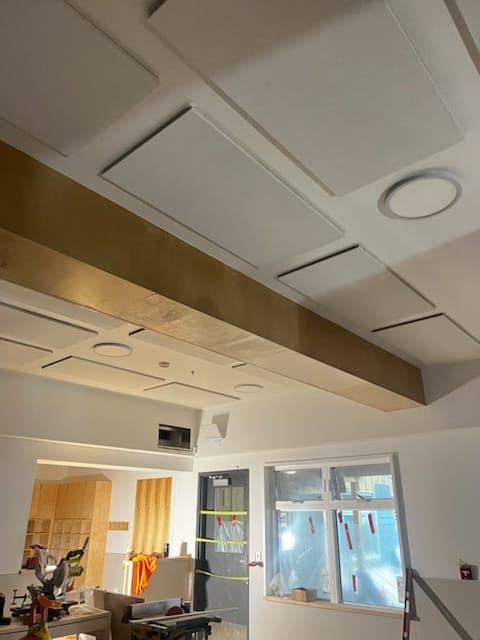
Our West Vancouver Schools Early Childhood Education Centre has been built with intention and love. Every detail reflects our commitment to children, to their healthy growth and development, and to their unlimited potential to learn. This commitment has been central to every decision we have made, from the colour scheme, to the open design, to pushing the ceiling height to the maximum allowed in a modular build, and investing in larger windows to maximize natural light.
Every detail, both big and small, has been made with a commitment to beauty and educational excellence. The following photos illustrate key design elements and capture the essence of why we selected what we did, with our youngest learners at the heart of each thoughtful decision.
Designing with Forever in Mind
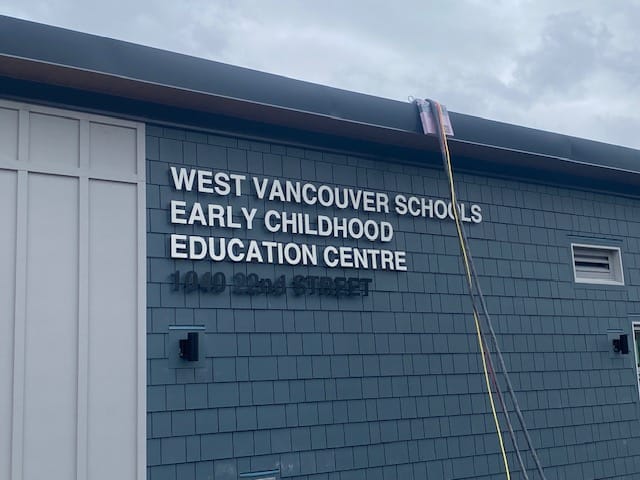
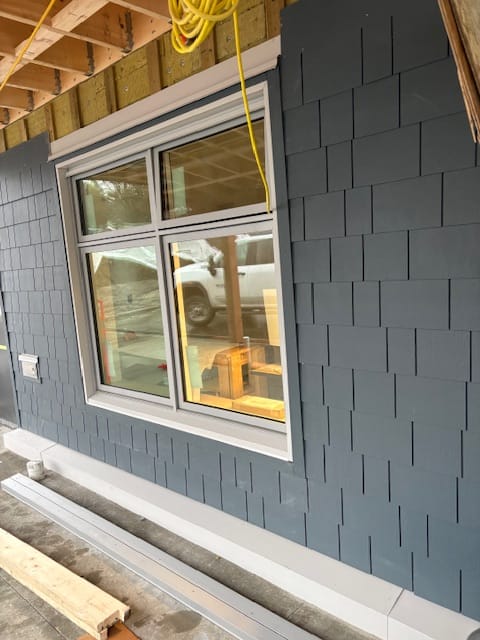
As we made decisions about our new early childhood education centre we were working with what we called the "forever timeline" in such that every decision made was intended to be timeless and respectful to a high quality learning environment with minimal distractions and the design emphasis to hold our children at the centre. Flashy, bright or trendy colours were not considered, all choices were built off a neutral palate. The blue tones are all on West Vancouver School District brand.
A balance of beauty and practicality was embedded in the exterior design choices we made in collaboration with our design team. Beyond aesthetics, the siding was selected with durability, longevity, and climate responsiveness in mind. The exterior of the Centre is finished in James Hardie® fibre‑cement siding, a material deliberately chosen for its strength, performance, and visual versatility.
As a public early learning space, our West Vancouver School District Early Childhood Education Centre required materials that would age well, require minimal maintenance, and perform reliably in a coastal environment, while maintaining their visual integrity over time. We intentionally steered away from more industrial options and leaned into the aesthetic flexibility of the materials selected, choosing to create a home‑like, welcoming presence rather than a traditional modular school construction aesthetic.
Designing with Flare & Function
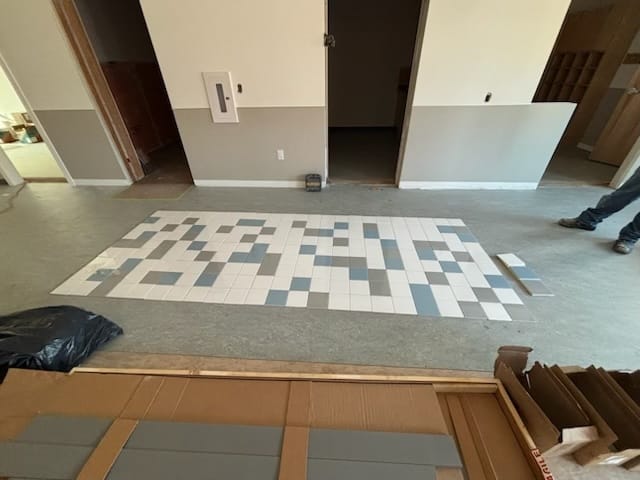
The interior design selections were truly a passion project for my colleague Laine Anderson. Her vision and dedication are central to the success of creating a beautiful, forever build for the children and families of West Vancouver. Despite the building surprises we encountered along the way, Laine never lost sight of the importance of high‑quality, educationally innovative, and thoughtful design.
Prior to her district role, I watched Laine work as a teacher and then as a school vice‑principal, and witnessed firsthand her tenacity and remarkable attention to detail. She has been the perfect partner in this journey. I share this because so many of the design touches throughout the Centre are the result of her creativity and care.
One example is the stunning tile work in our Early Childhood Education Centre. When Laine first came to me with her whimsical idea for the organization of the tiles, I will admit I wasn’t sure, I was more inclined to play it safe. But her excitement was contagious. As she explained the thinking behind the uneven positioning, and how whimsical tile work could introduce play, curiosity, and warmth into a functional space, supporting learning, language, and a sense of belonging even during everyday routines, I was completely won over.
Today, it absolutely is one of my favourite little touches in our new Centre.
Designing with the Round About
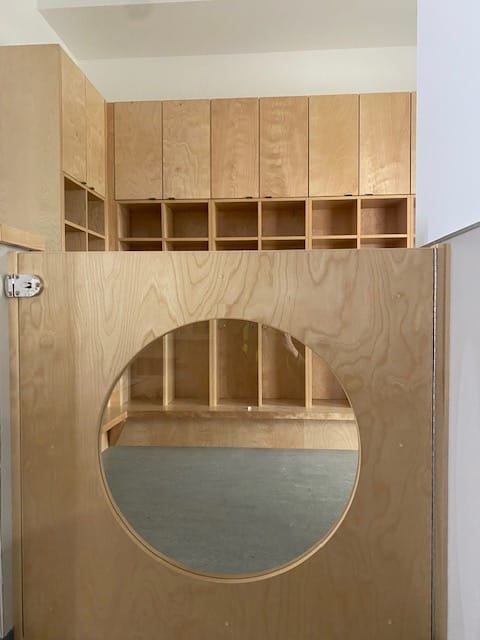
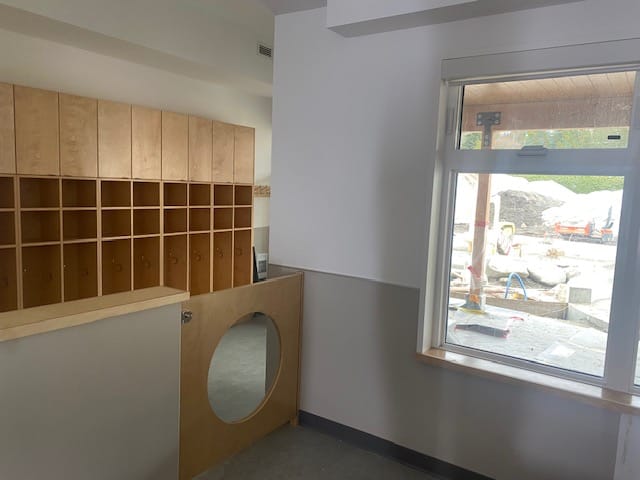
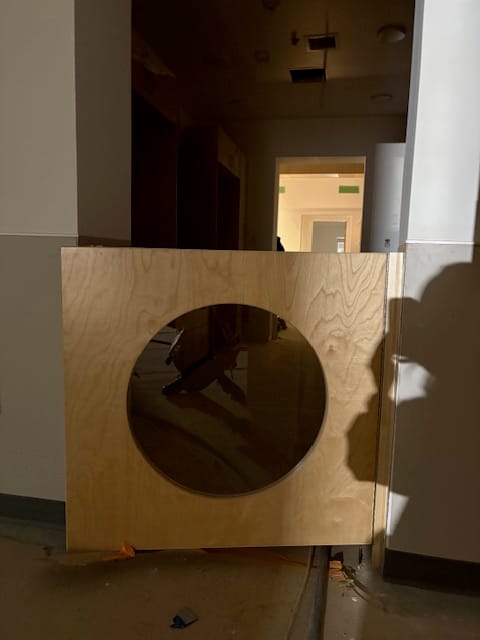
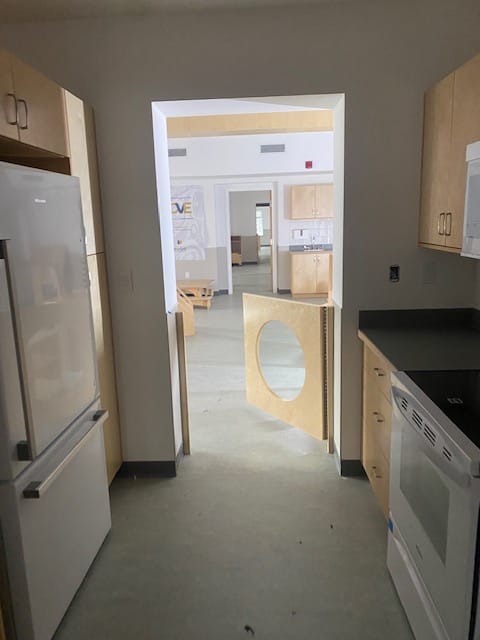
Another favourite interior touch in our West Vancouver Schools Early Childhood Education Centre is our small wooden circular doors. I first encountered doors like these many years ago in another local child care centre and remember being struck by their unique design. More recently, Laine came across them during a visit to Frog Hollow Neighbourhood House and returned with excitement, sharing her discovery with me. I was thrilled, having long forgotten about these beautiful doors, and delighted that her find brought them back as a central design feature woven throughout our building.
Not only are these doors aesthetically pleasing, they also serve an important educational purpose. Circles are a naturally engaging shape for young children. Their softness gently invites children to pause and peer through, encouraging curiosity without overstimulation. Unlike hard edges or rigid vertical lines, circles offer an invitation that feels calm and welcoming.
The placement of the glass circle at the centre of each doorway was intentional. As children transition between spaces, they can look through the opening to see what, and who, awaits them. This supports emotional safety, confidence, and a sense of agency as they move through our early childhood education centre. Scaled specifically for young children, the doors reinforce respect for childhood and create moments of recognition and connection throughout the day.
Once again, the use of circles softens the environment and diminishes any sense of institutional design, demonstrating that function and beauty can comfortably coexist in early learning spaces.
Designing with the Little Things That Aren't So Little
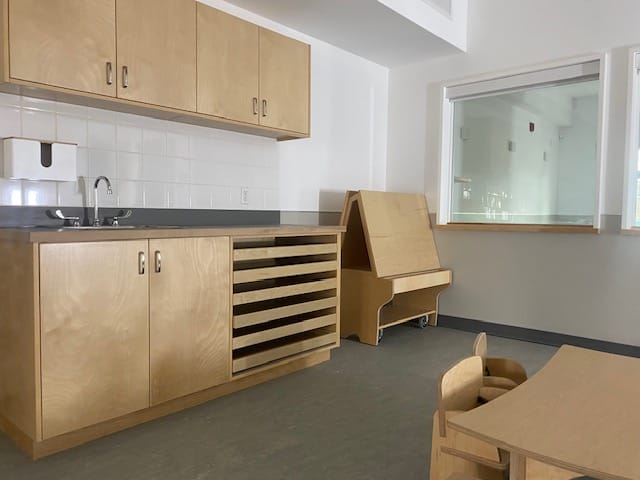
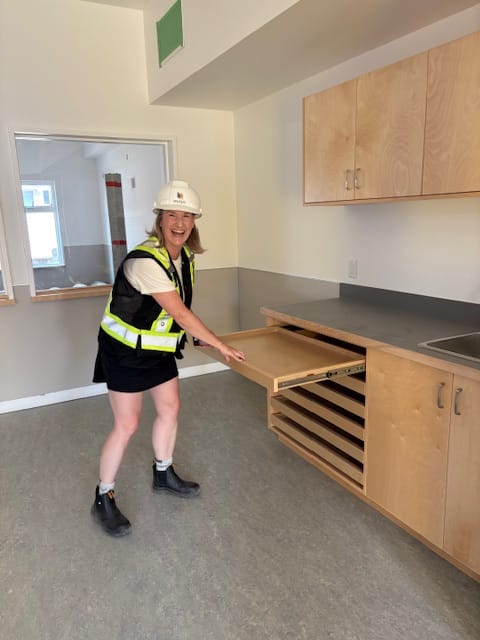
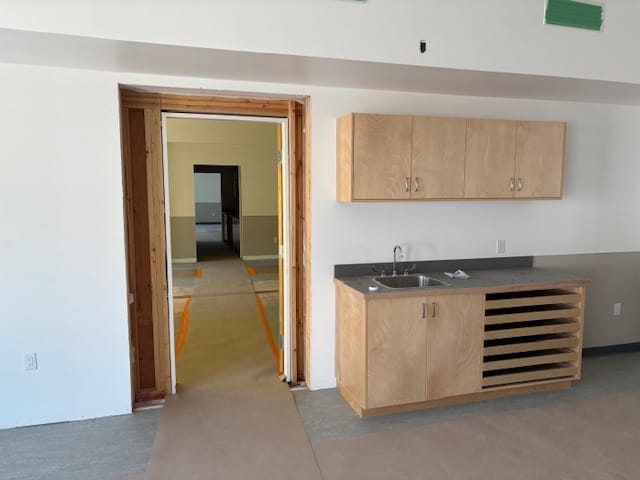
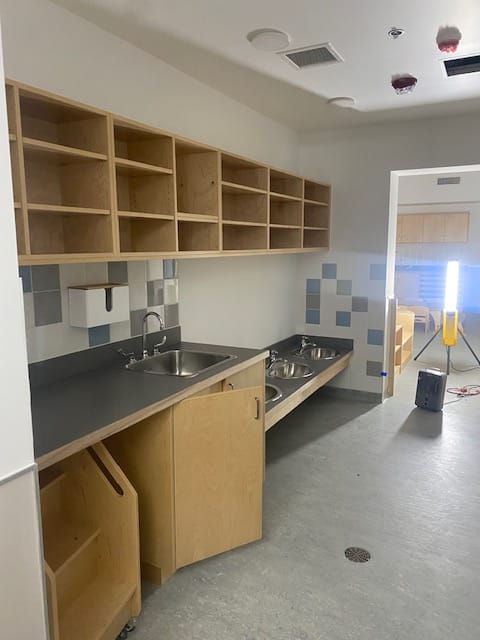
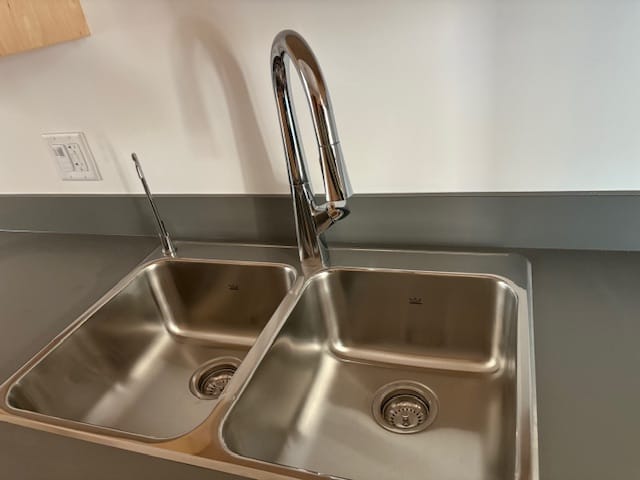
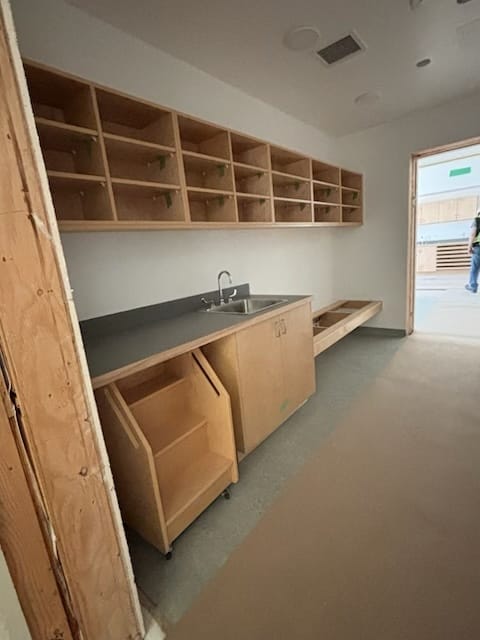
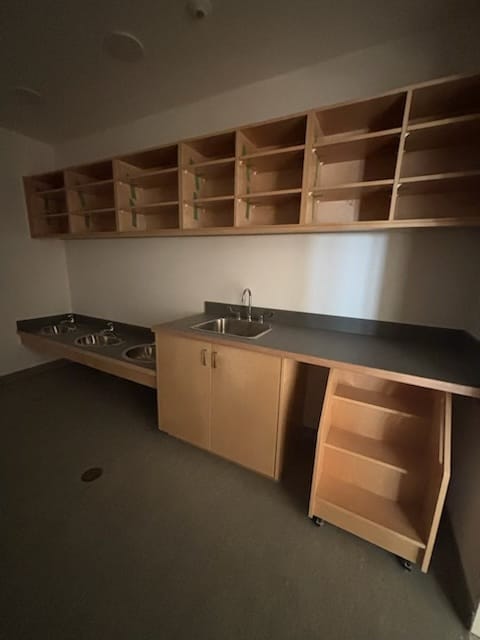
Sometimes, for teachers, it really is about the little things. Our built‑in paint‑drying racks and under‑the‑sink paint skimmers are a perfect example of this. Supporting the arts through our design decisions was important to us, as part of our commitment to ensuring that art‑based experiences are embedded directly into the physical structure of our new Early Childhood Education Centre.
These may seem like small details, but they are core to the type of early childhood education program we intend to offer. Positioning the inspirations of Reggio Emilia alongside the physical design of the space has been central to our decision‑making processes. From creating a dedicated atelier studio space at the front entrance of the Centre, to ensuring ample, well‑organized storage for art materials, these design choices will allow our early childhood education team to offer the highest quality learning experiences with “just right” resources readily at their disposal.
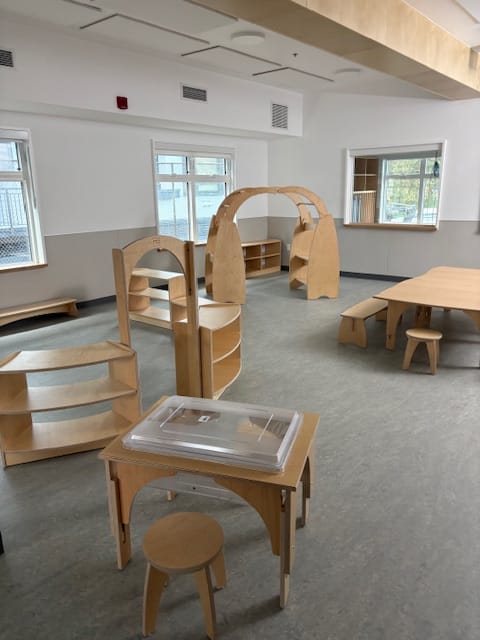
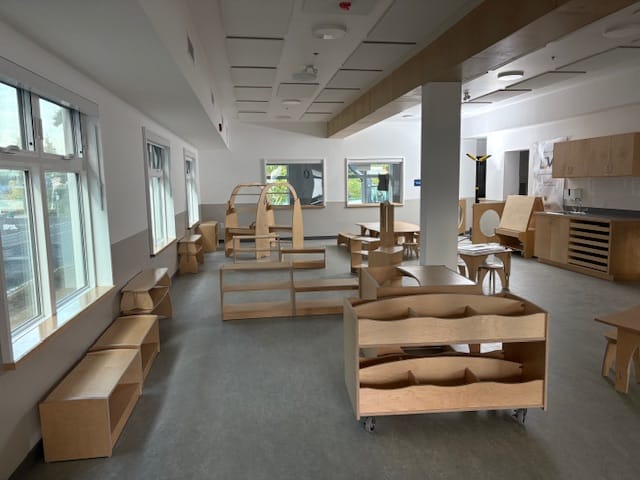
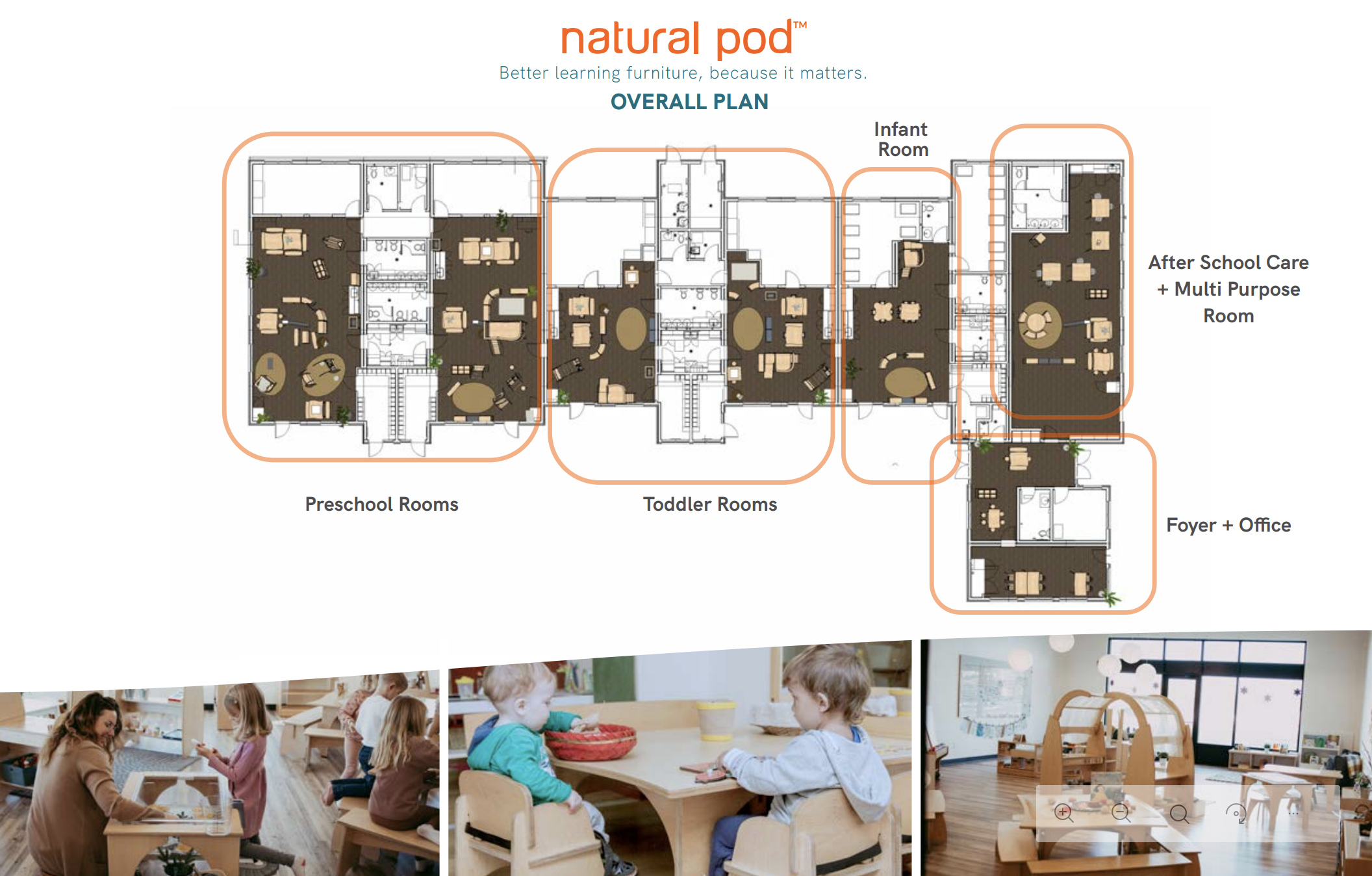
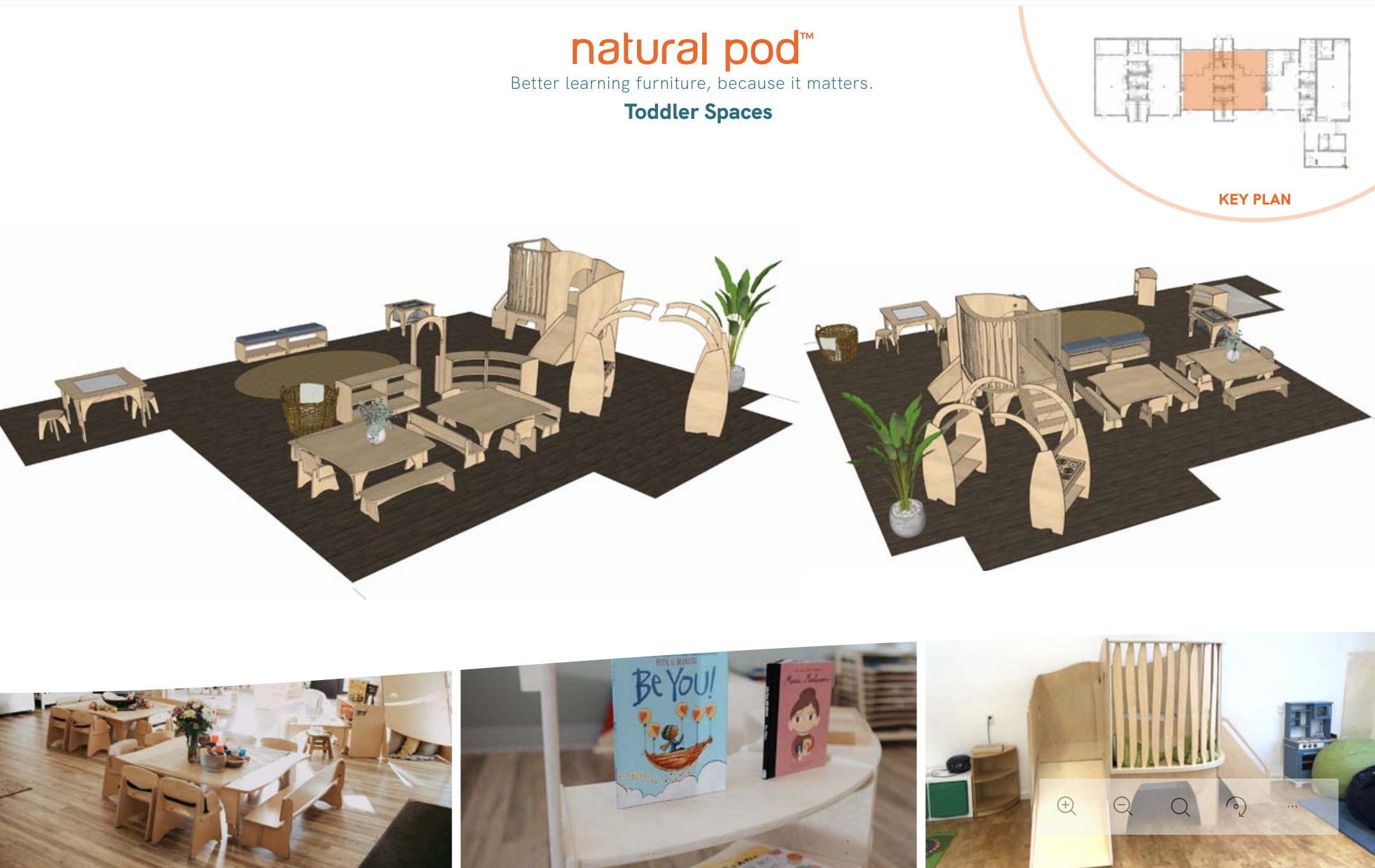
The neutral, light maple tones of the wood were intentionally chosen to align with the Natural Pod furnishings and to draw our design together cohesively. Our concept design work with the team at Natural Pod inspired us to ensure the rest of the building reflected these neutral tones, where beauty, respect for childhood, design, and pedagogy intersect. Their products are scaled specifically for young children and honour how they move, explore, and make meaning in the world. Once again, the soft, nature‑based, open‑ended designs bring calm and warmth into our early childhood educational space.
Designing for Growing Bodies
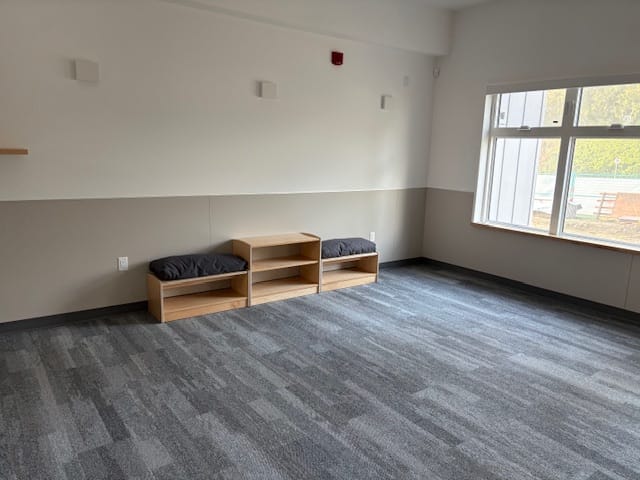
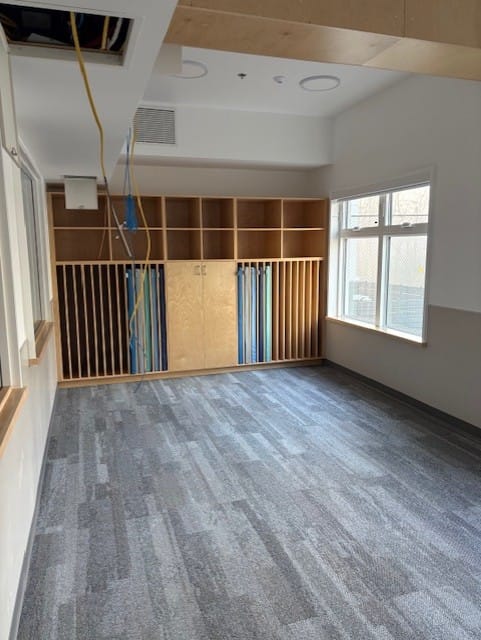
Movement and rest are two components of educational design that are receiving much‑needed attention. Biologically, both movement and rest are critical to cognitive development and educational growth; therefore, designing learning environments where each is intentionally embedded into the physical footprint is essential.
Over the years, I have been a guest in far too many educational spaces where room to move within classrooms is minimal and quiet places for rest are rare. The more we learn about healthy human development, the clearer it becomes how integral it is to create school environments that intentionally support both movement and rest as part of everyday learning.
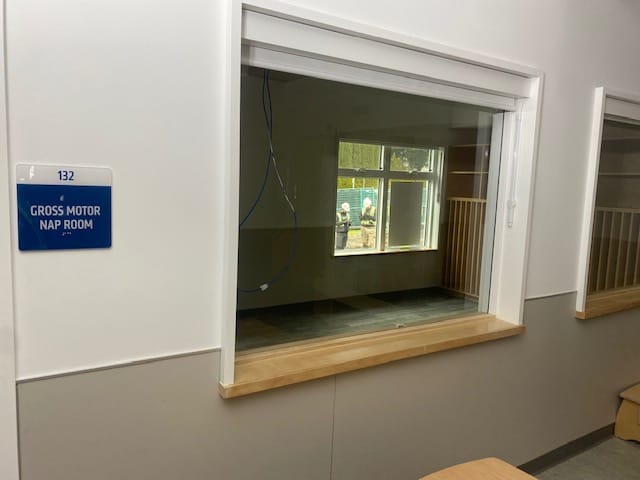
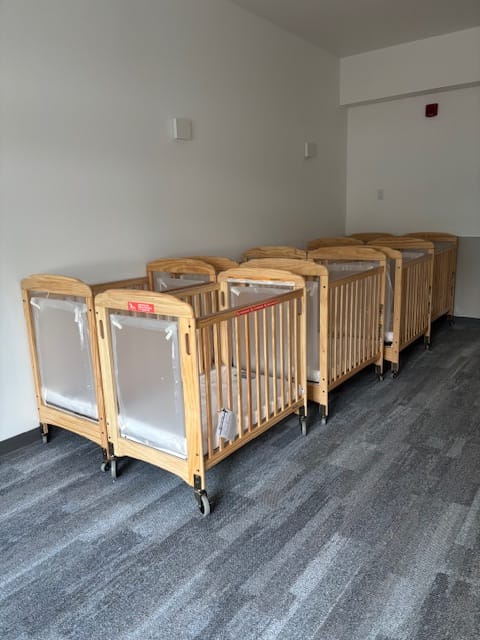
Design features in our early childhood education centre that promote movement include the open‑concept design, which features walk‑through kitchens and uncluttered community learning spaces, alongside dedicated, well‑lit, airy, quiet rest spaces. The furniture selections, again, were carefully chosen, with our nap mats aligned with West Vancouver Schools’ brand colours, and our infant cribs selected with double peek‑a‑boo windows so children can see their friends when it is time for rest.
Designing for the Best
With limited budgets and many operational costs, public institutions are often forced to cut corners on design decisions, opting for lower‑quality finishings and appliances to stretch the dollar. In our new early childhood education centre, we stayed true to our commitment to giving our youngest learners the best throughout the design process. From each fixture to every piece of hardware selected, we did not cut corners.
We took our fiscal responsibility seriously and did our best to ensure each decision was made with the long game in mind. We want our educators working in our child care centre to be comfortable and to have reliable furnishings that support their capacity to provide the best care for our littlest learners. Again, the little things are not so little when you are committed to building something bigger and better for all.
Designing for the best also includes thinking about our educational team and their needs. In our design, we considered the realities of working as an Early Childhood Educator and the physical demands of such an important professional role. Little features that respect their working realities include the incorporation of purposefully designed acoustic panels to absorb the happy squeals or struggles as our youngest learners begin to modulate their precious voices in new, shared social settings.
We also had custom‑built climbing ladders designed for our littlest learners, allowing them to independently climb onto change tables, with the hope of alleviating some of the very real physical lifting our educators do as they care for young children. The shared kitchen spaces between classrooms were also intentional, providing opportunities for overlap and relational connectivity among staff as we build community within our new child care centre.
Designing to Welcome
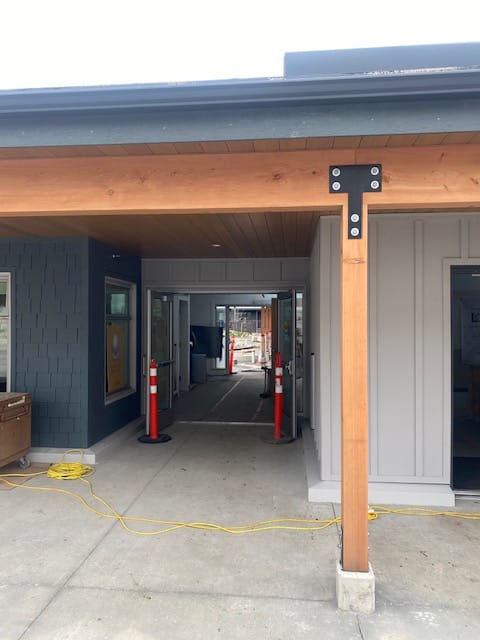
We were very intentional in how we worked with our design team to create an educational centre where welcoming was at the core of our decision‑making. From the entrance of our building to each classroom, we considered how families would feel arriving and entrusting us with the care of their most precious gift, their children. This is not something we ever take for granted, and we recognize that this level of care represents the ultimate act of trust.
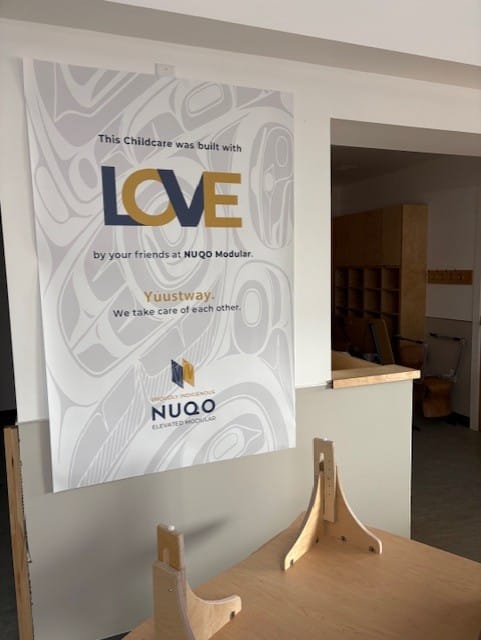
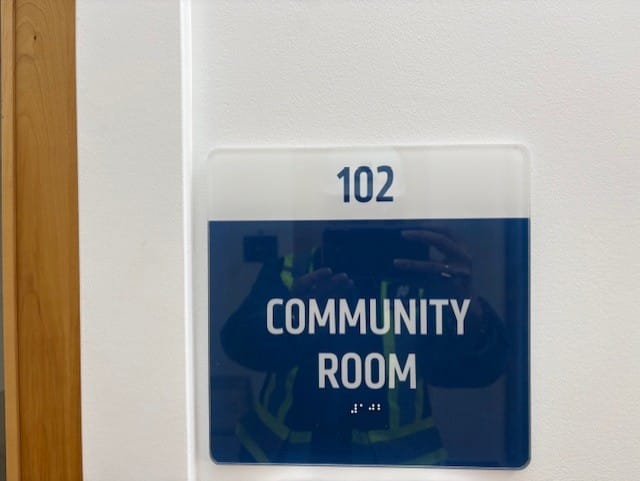
Our main entrance was purpose‑built by the amazing team at Nuqo to reflect our commitment to creating a welcoming space for all who enter our West Vancouver Schools Early Childhood Education Centre. Upon entry, to the right, is our community room, which will serve as a multi‑purpose space for intergenerational, family‑focused programming, as well as before‑ and after‑school care. We are excited about the slate of programming coming together to serve our community in new and innovative ways.
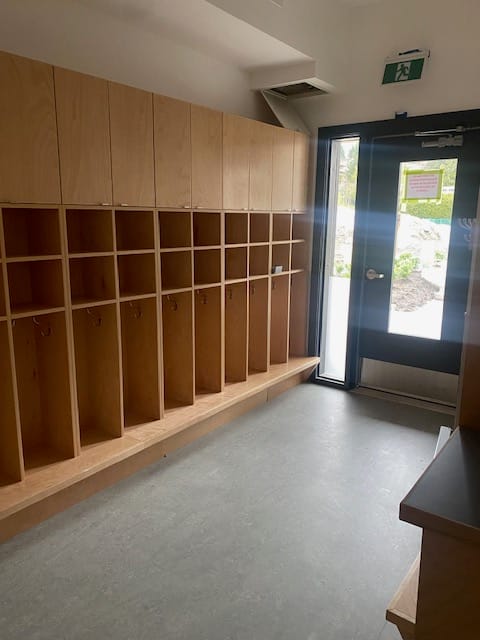
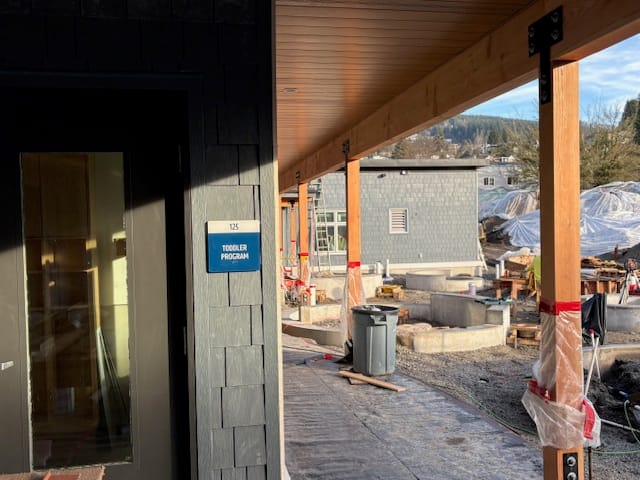
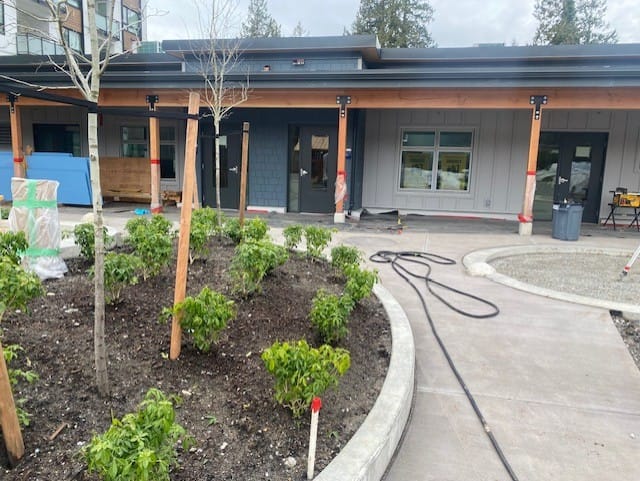
The entry to each classroom is accessed from an outdoor hallway. Each room has a welcoming area where children can store their belongings before entering their classroom. We designed each space with careful attention to flow and movement, ensuring a clearly defined transition between drop‑off and settling in for the day. Once again, our small circular doors help to gently define the entry into the classroom for both children and parents, supporting the transition between home and school.
We are sensitive to the dynamics of “kiss‑and‑go” policies and want to ensure families always feel welcome, and reassured, knowing that some mornings, letting go can be harder for both little ones and the grown‑ups who love them. Creating a sense of belonging centres on welcoming all, this is how we start the learning journey for our youngest and their families at the West Vancouver Early Childhood Education Centre.
Designing Where Outside Meets Inside
While this spin could continue in many directions, for the purpose of this post, and in recognition of the attention span and patience of my readers, this final section focuses on how we designed the inside to meet the outside. Once again, designing with intention was the driver behind all choices and selections related to how we bridged learning spaces, ensuring our commitment to educational excellence for all remained central.
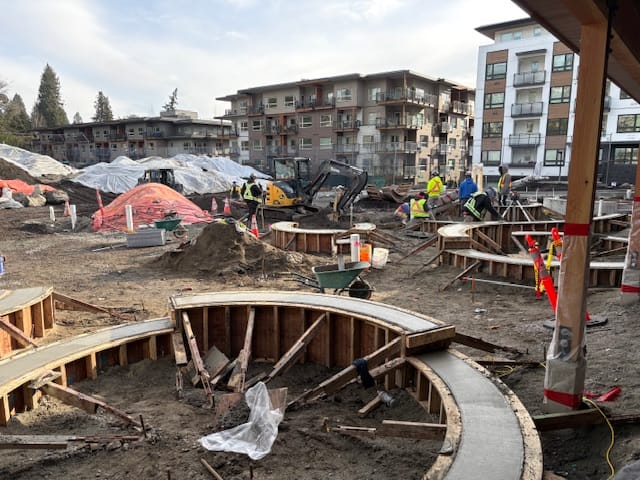
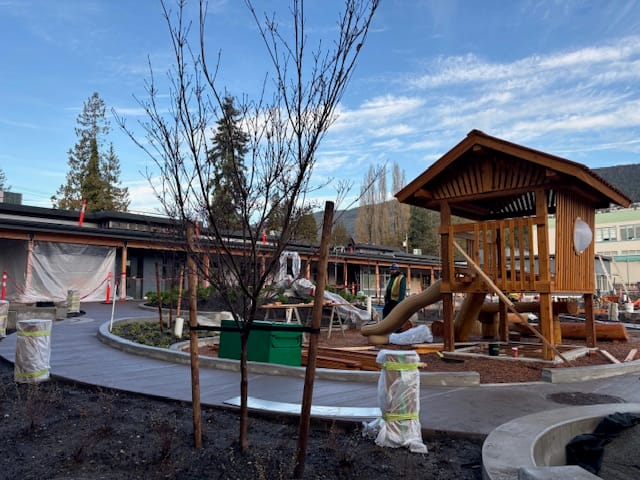
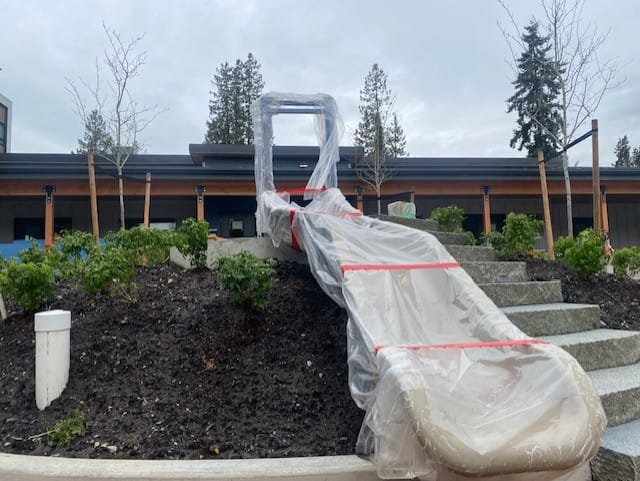
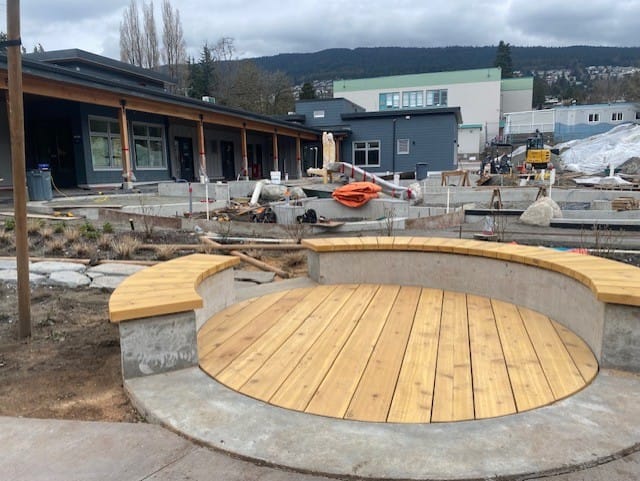
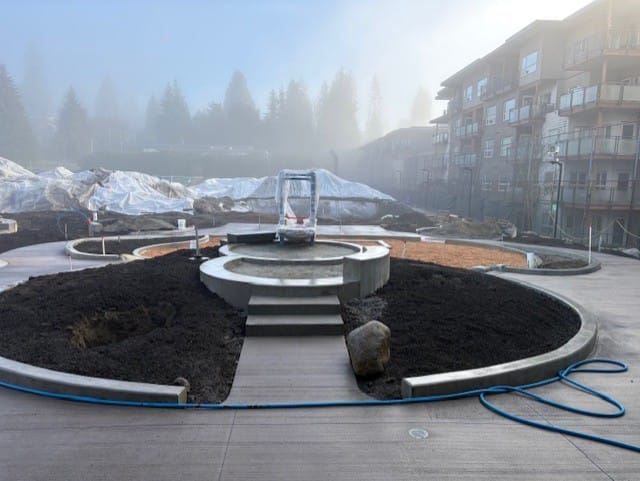
We quite literally extended circles of care into the design of the outdoor playscape. Using circularity as a unifying theme, we continued the concept of circles of care beyond the building and into the landscape. Through a mix of resources, we repurposed discovered boulders and worked closely with the team at Groundswell to create an outdoor playscape that models how to thoughtfully design a nature‑based environment for the long game.
Concrete jungles and plastic prefab materials were never part of our design vision. We intentionally steered away from elements that might detract from a child’s sense of wonder, autonomy, and choice. Instead, we committed to creating something beautiful for our community and are proud to be delivering this and more.
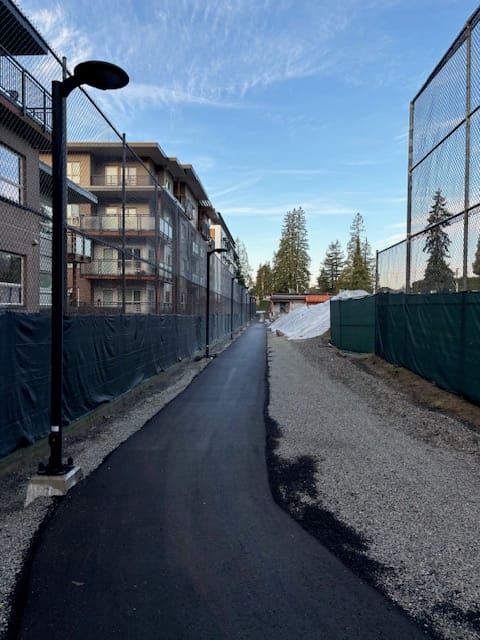
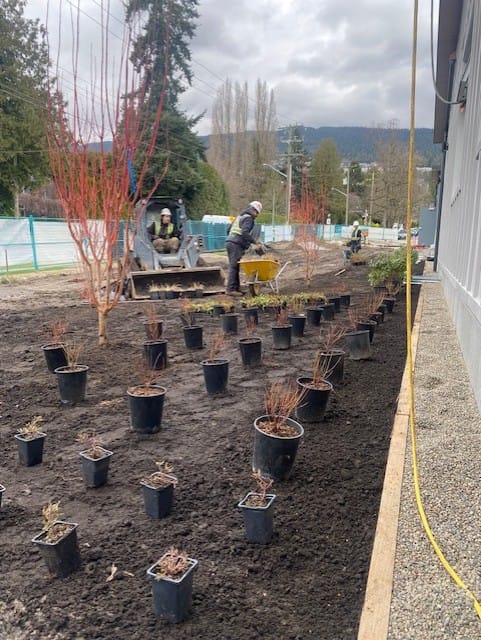
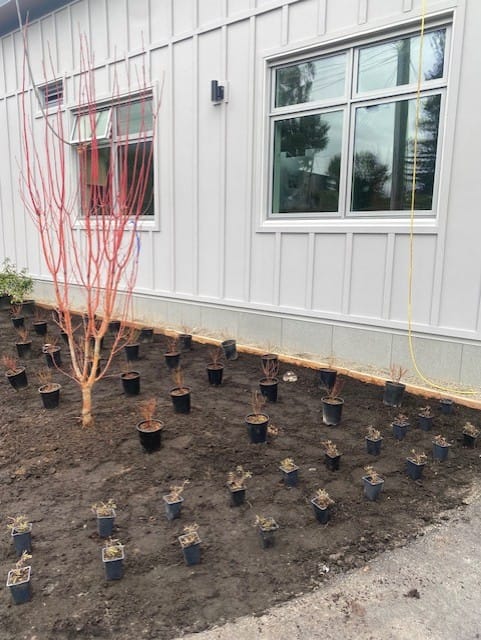
From a new paved and well‑lit community pathway between our Early Childhood Education Centre to the adjacent family housing development, Kiwanis Village West and our school board office, to the carefully considered planting selections, intention guided every aspect of our outdoor design. The landscaping reflects West Coast environmental principles that support the local ecosystem while responding to the realities of climate change. No considerations were left by the wayside as we created an outdoor learning environment for children to enjoy, and treasure, for decades to come.
This story is a photo journey of love and intention. The opportunity to serve our community while designing something that will be enjoyed for decades to come has been a true gift. There are many individuals who deserve gratitude and recognition, and it is important to acknowledge that the age‑old concept of “it takes a village” truly holds.
This work would not have been possible without the funding streams we successfully accessed, nor without the dedicated build and design team we assembled, alongside the support of our school district and ministry leadership teams who continue to prioritize a landscape that has yet to be fully integrated into K–12 public education. While we are coming to the end of our building process, we are just at the beginning of our educational adventure, and we are so excited to get started.
Author's Note: This piece reflects my voice, learning journey, and perspective. Copilot was used as a supportive editing tool to assist with readability, grammar, and flow.